#DBC50Summer Book 21-30 Recap

Screen Shot 2018-07-07 at 3.54.07 AM

Is this my life? Really? Is this my REAL life? The past two months of #DBC50Summer have turned into some surreal moments! From receiving the most thoughtful, motivational DMs, tweets, and personal written notes (even snail mail) from these incredible authors to the sheer amount of knowledge and inspiration I have gained – the whole thing makes me question if it’s really real!

I have to say again how much I appreciate the outpouring of support from you, my PLN, as my family and I begin the journey of managing Type 1 Diabetes with our youngest daughter, Sophie. A quick update: we’ve been home from the pediatric hospital for 2 nights and her blood sugar is still stable and she’s been so brave in her blood sugar checks, maintenance insulin, and basal insulin injections! We have to poke that sweet girl 9 times a day as part of her treatment plan. Our 5 year old now knows and can explain vocabulary like blood sugar, insulin, diabetes, pancreas, and energy. She’s had more weight on her little shoulders than many adults I know, and her story is already a powerful one. She’s not lost a bit of her spunk through this, and I’m simply blown away by her. I appreciate you giving me a second to share a bit about her & patience as I have been taking my time in reading the past couple of books. We’re back at full speed now though!

Continuing on, for those that are just joining the fun, #DBC50Summer started in June when the 50th book was released by Dave Burgess Consulting, Inc. (Check out Books 1-10 and Books 11-20!) Through a bit of what Dave Burgess calls Creative Alchemy, I drew on multiple problems I wanted to solve and created a solution that took care of them all at once. I had over half of the DBC, Inc books sitting on a shelf and had only read about a dozen of them. After meeting Dave at a conference (he was keynote and I was a presenter) in my home state in April, I was re-energized and even wrote a quick blog about it here. I had not had the inspiration to blog in a long time, but I knew I wanted to jump back into social media (Twitter specifically) and wanted to reflect on my practice more through blogging. I was also feeling stagnant in my professional growth, and knew that the DBC books could be the answer. The ones I had already read were fabulous so I knew not to expect any less from the others. With each of those problems, the perfect solution was to read the DBC books, and blog about them. Dave has strong words about being inspired and not implementing…

So with this in mind, I decided to implement at least one thing from every single book in the 2018-2019 school year. That’s one way to handle stagnant teaching, right?!

It’s important to note that I am reading the books in order of their release date. This has been incredible for several reasons. I am able to see names of current DBC authors in past books. It’s so cool to see those names knowing what’s getting ready to happen for them, the doors that are opening by sharing a part of their story in someone else’s book. I love seeing the evolution of DBC, Inc through the years. It’s really neat to see the maturity of the line up as it continues. I was beyond inspired by the first book, Teach Like A Pirate, written by the president of DBC, Inc and continue to be amazed at each book I pick up all the way up to book 30! It is incredible that each book continues to push me and make me want to be a better educator. One would think that after 30 books I’d be tired of reading them, simply going through the motions by now, or even ready to throw in the towel. I’ve got to tell you, I’m more excited now than when I started this journey in June! These authors have become vital players in my PLN and I have found that they are so relatable and approachable. The community around the books are full of amazing people who support one another and challenge each other to be the best educator possible for the students. What I love is that no matter what the book is, no matter the content, author, or how many copies sold, every single DBC addition points back to the learner! Talk about having your priorities straight – this group has that going for them!

So let’s see what’s been happening in #DBC50Summer the past couple weeks:

21 – Escaping the School Leader’s Dunk Tank by Rebecca Coda & Dr. Rick Jetter: This book rips back the curtain on the ugly side of education. Politics, jealousy, and deceit are everywhere and education is no exception. Rebecca & Rick want us to not just survive as leaders, but thrive in education and share ways to do just that in this book!

22 – Start. Right. Now. by Todd Whitaker, Jeff Zoul, and Jimmy Casas: These guys take you on a trip that inspires you to get started as a leader and not wait another second! They share that leaders Know the Way, Show the Way, Go the Way, and Grow Each Day! This is a gut-punching book that will challenge you to consider if you’re doing all you can as a leader!

23 – Lead Like a Pirate by Shelley Burgess and Beth Houf: I have never been so nervous to click publish on a blog. Why? This book was integral in my walk as an instructional coach and I wanted to make Shelley & Beth proud! I wanted to uphold the integrity of the book and I literally want every leader out there to purchase a copy of it! Power-packed. The only way to really describe how incredible it is!

24 – Table Talk Math by John Stevens: One of the authors of The Classroom Chef wrote a second book and I was enamored by the stories of John’s family and their discussions of math in its relevance to the real world! These authentic math problems bring a whole perspective, where math isn’t to be feared, but understood. Why not discuss math nonchalantly around the dining room table? John shows us how!

25 – Teaching Math with Google Apps by Alice Keeler and the late Diana Herrington: Another amazing addition to the DBC & Google family, Alice and Diana share 50 ways to use Google Apps to implement technology in any math class! What’s great about this book though is that the suggestions aren’t just related to math!!! Grab a copy, even if you aren’t a math teacher!

26 – Shift This by Joy Kirr: Y’all… this book right here… just go get it. Trust me, and go get it! Joy is a total jewel and she shares small changes that we can all make in our classrooms to make big impact! With a growth mindset, we can all make changes in our practice and Joy shows that no matter how you may feel about your own teaching, we can always shift something and get huge results!

27 – Unmapped Potential by Julie Hasson and Missy Lennard: What does your mental map relay about education? Why do you believe what you believe? How can you break through barriers and change your mental map? This book inspired me to put a HUGE road map of the United States in my classroom – find out why in the blog, then go purchase your own copy!

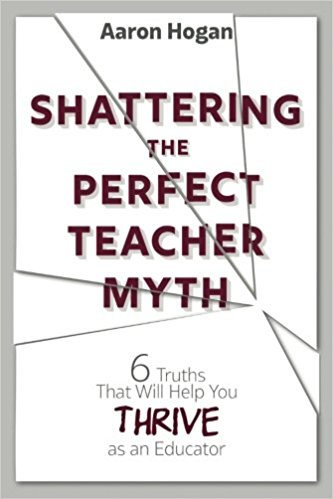
28 – Shattering the Perfect Teacher Myth by Aaron Hogan: Perfect teachers are unicorns, centaurs, leprechauns… they don’t exist! Aaron shatters the myths that surround a perfect classroom – he addresses it all in order to help you THRIVE in education: behavior, engagement, relationships, and so much more! I thoroughly enjoyed reading this book!

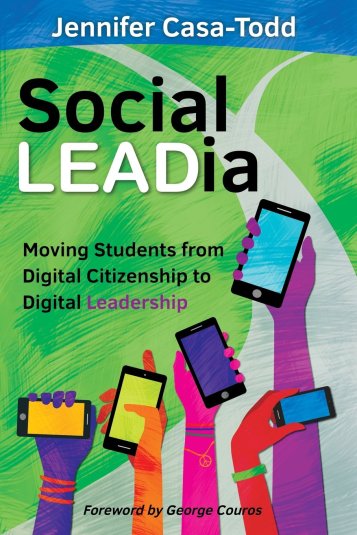
29 – Social LEADia by Jennifer Casa-Todd: I couldn’t wait to get to book 29 so I could finally read the book I won in the #DBCChallenge! Jennifer shares why we shouldn’t stop at teaching digital citizenship, but empower our students to be digital leaders through the use of social media. She shares stories of change and global impact led by STUDENTS! This book is a great way to start the conversation about opening up the internet and showing students how to navigate social media rather than hoping they make the right decisions outside of school.

30 – Spark Learning by Dr. Ramsey Musallam: An extension of Ramsey’s TED talk 3 Rules to Spark Learning, we are shown how to inspire and encourage curiosity in our classrooms. Go beyond being “the fun teacher” and actually engage the students through their own natural curiosity to learn content while the teacher fill in the gaps.

You can’t go wrong with any of these books! All 10 of these books were released within 6 months! DBC is clearly picking up steam and moving ahead at an exponential pace! In fact, we’re up to June of 2017, so in less than a year, DBC released another 20 books!!! Dave and Shelley still run the business from their house (so impressive)!

If you want to jump on board with #DBC50Summer, it’s not too late! You don’t have to read all 50 of the books that were released as of early June to hop in! Just share your reflections on ANY DBC book using blogs, sketchnotes, flipgrid, or any other method and use the hashtag #DBC50Summer. Reading and implementing ideas from ONE DBC book is better than reading nothing at all, so join me! This has been an incredible ride and I’ve still got 20 more books to go to fulfill the self-imposed challenge! I’m so pumped to continue this journey and looking forward to implementing and learning so much more! If you want a quick peek at the implementation plan from #DBC50Summer, as well as seeing the books in order, check out my spreadsheet (you can also access the flipgrid for each book from there as well).

As I stated a LONG time ago, #DBC50Summer is referring to the season of summer, not summer vacation. I’m excited to continue this journey through September! However, I do need some help (LOTS of help) coming up with something to call this after summer is over! I’m not planning to stop with book 50 – I will continue reflecting, blogging, implementing, and sharing every DBC book released as long as they release them. I mean, come on – have you seen the books that were released this summer?! There’s pure gold there, too! No way I can stop at 50!!! So…brainstorm! Share creative names with me! What should we call #DBC50Summer when all 50 books are read and it’s not summer anymore?

Here we go with the next set of 10! Book 31 was written by a POWERHOUSE duo! Matt Miller of Ditch That Textbook and Alice Keeler of 50 Things, 50 Things Further, and Teaching Math with Google Apps teamed up to bring us Ditch That Homework! I’m so excited about reading this one! It’s been on my shelf since September 2017 and I’ve been following the blogs of both of these authors for years! It’s going to be epic!
#DBC50Summer 29/50: Social LEADia

Before I even start this blog, I feel the need to set the scene around me. I am sitting in a super uncomfortable chair that I slept in for about 45 minutes last night (so don’t be too harsh about a typo here, there, and everywhere; I’ll fix them after some sleep) wrapped up in a hospital blanket (because anything above freezing seems to be too warm), listening to the beeping of the machines (seriously though, why are they so loud?). The preschool/daycare my 5 year old daughter attends called me yesterday afternoon to tell me that Sophie was showing signs of an infection. My husband left work to take her for a quick check-up anticipating antibiotics and a relaxed evening. However, when Sophie’s blood sugar came back at over 330 when suggested range is 80-180, we were referred to the pediatric hospital in city about an hour away. By the time we reached the hospital and did blood work, her blood sugar had elevated to 775! We were admitted and Sophie was diagnosed with Type 1 Diabetes. Today we learned all about her treatment plan and are quickly becoming versed in the vocabulary that surrounds juvenile diabetes.

I tell you that story to tell this one. The support of my PLN has been tremendous. I can’t tell you how much I appreciate every single text, Voxer message, DM, tweet, and facebook comment/message. I valued my PLN before as a professional group of amazing educators who push me and hold me accountable for implementing the insane ideas I have. After this experience, I hold my PLN close to my heart as part of my extended family. Taking just a few minutes of your time to share your well-wishes, your stories, or just to send a digital hug during this unexpectedly wild ride means more to me than any of you will ever know. Sophie is finally resting in her hospital bed (she is clearly the captain of this little ship) and I wanted to take the few minutes I have to share Jennifer Casa-Todd‘s incredible addition to Dave Burgess Consulting, Inc because it just has to be now! She authored book 29 titled Social LEADia.

socialleadia

You can sense Jennifer’s passion for connecting students with the world through social media from the very first page. She shares countless stories of classrooms that integrate social media, not only incorporating positive digital interactions, but moving beyond that to developing leaders! The tremendous thing is that these leaders in the digital world are often not the leaders we would expect in the physical world. Frequently it seems that leaders in the digital world found their voice by impacting others through social media. Jennifer shares the thoughts and inspiring stories of individual students from kindergarten through high school. The power behind these voices would lead you to believe you were speaking with mature adults, but a deeper look would show that, in fact, these are children. At the end of each chapter is a Student Vignette in which Jennifer gives these students the opportunity to further amplify their voice. There are also summaries, discussion questions, notes, and a “meet the student” at the end of each chapter. Using these “meet the student” segments of the book allows educators to inspire their own learners to make an impact through the power of social media.

The power of twitter will forever be a topic I will yell from the mountaintop. After the encouragement, support, and genuine empathy I’ve felt from educators I’ve never met face-to-face while my youngest child has been in the hospital the last 20 hours is something I will never forget. Why shouldn’t we want our students to feel that same connection and empathy for others around the world? Why wouldn’t we want our students to feel that encouraged by people they’ve never met? Every child deserves a champion, and that champion just might be someone in their own network!

There is no way that I can possibly share all of the incredible points made by Jennifer in Social LEADia. In fact, I literally STOPPED highlighting in the book because I was highlighting every other sentence. Some of the a-ha moments I had are listed below:

Curriculum and IT should be working together in order to develop the foundation for teachers to create the best lessons possible. No longer should these two entities operate parallel; they should intersect at every possible opportunity. This better allows IT to know the WHY behind the need to open the floodgates and curriculum to better understand WHAT tool could meet their needs, as well as HOW to troubleshoot simple technology issues to create a more fluid environment with less interruptions.

The foreword by George Couros (author of The Innovator’s Mindset, book 9) is superb and Jennifer references multiple times the GC quote that has circulated Twitter multiple times (I add to that circulation because every time I see it, I feel a moral obligation retweet it.).

We need to make the positives so loud that the negatives are almost impossible to hear.

Another huge takeaway is that we, as educators, should treat discipline over digital matters in the same manner we would treat discipline in analog matters. It’s not a reason to take the devices and opportunities away from each and every student, or even the one or two students who made a poor decision. Rather, this is a time to have an authentic conversation in which we teach that student(s) how to make more appropriate choices. If a student is cyberbullying another student, it is a bullying issue. Just because the computer is involved doesn’t mean that it’s the computer’s fault. Artificial Intelligence has come a long, long way, but giving an automation feelings, empathy, love, hatred… not happening. It’s the person behind that device that should be removed from the situation at hand, pulled into a conversation, then placed back in the situation with the opportunity and freedom to make better choices… not the device.

I could go on and on! I also love the chapter “Building Bridges”! This chapter is a must-read for those who are fighting the good fight to include social media outlets in education. Jennifer gives many talking points to share with district leadership, school teams, and parents! These are really points that no one can argue as they are rooted in sound logic. I posted a few of my other takeaways while reading using #BookSnaps (Check out Tara Martin‘s BookSnaps website if you are new to this idea or want to know how to create them for yourself! Great stuff!)

So after all of this, what is my implementation? We know that reading all of these books means nothing if I just store the knowledge and don’t share it with learners, whether those be my students or the teachers I’m honored to work beside. I am really excited to get started on this implementation; in fact, I may start on this one before students arrive back on campus! I am going (after years of pondering, stalling, and second-guessing myself and my super country accent when I get passionate about something) to start a YouTube channel (I will link it here when complete) and share my voice there. I will share tech tips and tricks with staff and students using screen-casting, I will include the voice of my students, and I will share some of “those” stories that I spoke of in the #EDUPassions blog from earlier in the summer (with permission, of course). This implementation will be so much fun!

Be sure to check out the hashtag #SocialLEADia to follow along with the Social LEADia community! You can find more information on the Social LEADia website and on Jennifer’s website. Jennifer started a podcast this summer and has three fabulous episodes, which feature some of the students we heard from in her book! Check it out here! Speaking of podcasts, Jennifer has been featured on several including Brian Costello’s The Teacher’s Journey, TL Talk Radio by Randy Ziegenfuss and Lynn Fuini-Hetten, 10 Minute Teacher Podcast by Vicki “CoolCatTeacher” Davis, and many more. Simply Google and find several more! As always, the flipgrid is a place for global collaboration and reflection. My sweet friend, Andrea Paulakovich, suggested this amazing idea at the beginning of #DBC50Summer and I couldn’t help but to jump on board as quickly as possible! Andrea and I copilot this space and hope that you will join us here with your reflections, questions, and ideas!

Well… here we go again rounding off another set of ten books! Book 30 is another book that I was, unfortunately, not aware was a DBC, Inc book until I began forming this idea of #DBC50Summer in June. However, I did start following the author immediately and I have been seriously inspired just seeing the things he tweets and retweets on a constant basis! Ramsey Musallam, EdD (yep, THAT Ramsey… from THE TEDtalk with nearly 3 million views… yeah, I felt like I’d been under a rock, too) brings us book 30 SPARK Learning! If his tweets (and almost 3 million views) are any reflection of his book, I will be flying through this one itching to reflect and share! Blog coming soon!


#DBC50Summer 28/50: Shattering the Perfect Teacher Myth

Typically when I prepare for any session I present, I create a Google Form that allows me to get to know the participants in a quick snapshot so I can best cater the session to meet their needs. One of the questions I always ask is, “How many years have you been an educator?” with the options as ranges in years of experience. These ranges were not created by accident; they represent my shifts in mindset throughout my career. These are not indicative of every educator’s mindset, but from the reactions I’ve received while presenting, I feel like I’m not exactly alone in these shifts. See what you think!

From 0-3 years, I thought I knew everything about how to teach. I was arrogant. I had just finished my college degree in three years and was one of the youngest people ever hired as a classroom teacher in my district (I was only 20 years old). I thought I didn’t need to sit through any more professional development; I was developed enough, thank you very much.

From 4-7 years, I realized just how little I actually knew about educating. The training wheels were off, so to speak. I had a great professional learning community, but wasn’t using them for support. I struggled through these years and matured more than any other stretch of my career. I attribute massively epic fails to this growth!

From 8-10 years, I experienced what I refer to as the “honeymoon” period. I finally felt confident in my ability to teach. However, it seemed like no one realized that I might know what was I doing, so I was left alone. No observations from other teachers, little to no requests to present content to my colleagues. It was great. I just did what I knew to do and impacted students with little additional responsibility.

Then, somewhere around year 10, administration and those with a higher pay grade than me figured out that my story might benefit other educators. So I started presenting and having people come observe. By no means do I believe that I’m an expert; in fact, it’s quite the opposite. I know enough about lots of things to be dangerous. However, I’m comfortable saying that I don’t know when I don’t know and am always looking to grow and learn. (I’ve just started my 13th year – Lucky 13!)

Then I suspect, around year 16-20, I will wonder if this is what I want to do for the rest of my career. I’m invested enough to be fearful of losing retirement benefits, but am I really sure I can continue this pace for another 10-14 years. Finally, year 20 and beyond, I believe I will be calculating my time left to teach and feel that it will be bittersweet. While I love educating (thus my twitter handle @iluveducating), knowing that I will only be 50 years old when I reach retirement, I can begin traveling and hopefully continue to impact education through other avenues. Or I may not leave at all. If given the choice right this minute, I’d still get up and go every morning! I enjoy it that much!

Book 28 released by Dave Burgess Consulting, Inc is all about that perfect teacher. You know the one… comes in every day, perfect teaching outfit, beautiful classroom with perfectly laminated posters covering the wall (How do they manage to laminate so perfectly? I always have an edge that is peeling!), students are amazingly well-behaved, scores are phenomenal, all the parents love them and administration thinks they walk on water. They have no idea what Pinterest-Fail even means because everything they touch educationally turns to gold. Okay, so I may be exaggerating, but you get the point. It was the teacher I was trying to be my first three years of teaching. The veteran teachers made it look so simple. They were the epitome of a perfect teacher! The thing is… these perfect teachers… they’re unicorns, leprechauns, centaurs… they don’t exist. And book 28’s author Aaron Hogan is out to prove it in Shattering the Perfect Teacher Myth!

teachermyth

This book was a quick read if you just read it at the surface level. I was able to finish it in about 2 hours, but I don’t recommend that you approach the book in this manner. In fact, neither does Aaron. This is a book that you will want to read a chapter, put it down, reflect, write, sleep, then come back to it a few days later. It’s powerful and honestly, pretty heavy at some points. It’s important to note that “heavy” is not a bad thing! Aaron is pushing us to not just survive in the teaching world, but to THRIVE as an educator! In order to THRIVE, he suggests:

T – Teaching Expectations

H – Hook Your Students

R – Reject Isolation

I – Imagine It Better

V – Value Vulnerability

E – Everyday Every Day

Aaron is very clear and quick to say that these suggestions are not a “fix-it” to every problem we will face. It will not prevent failure and it will not be effortless. Because of the depth of each of these suggestions, it is really in the best interest of the reader to take bite-sized chunks of this book. (This is clearly a “do as I say, not as I do” statement right now. Just trust me. I’ll take bite-sized chunks in the future because it was fantastic and I want to really spend time on a deep dive of this one.)

In Teaching Expectations, Aaron says that we need to model, teach, reteach, review, model – all those things we’d do for content pedagogy, that we consider to just be “good teaching” – we need to be doing those things for teaching behaviors as well! I love when he flips the script and asks if we’d send a student out of the classroom for not mastering the content. Instead, we’d find ways to reteach. It’s not three strikes and you’re out for mastering content, so why do we use philosophies like that for behavior? We can’t assume students know how to behave. We must teach them and set high expectations.

Hook Your Students was awesome because it took me back to Teach Like A Pirate by Dave Burgess. We need the constant reminder to do all we can do grab our students’ attention before we even begin to deliver the content.

Reject Isolation speaks to being a connected educator. Read about Aaron’s journey on social media and how it’s impacted him as an educator. We do not have to be in a silo anymore. Social media gives us a way out; it allows us to find “our people”. I can’t imagine my life (both professionally and personally) without the amazing PLN of which I get to be a part. I love you all!

Imagine It Better was a real gut-check. Spend some time here. What can you imagine doing better? What sacred cows can be slain? When you’re trying to be innovative, everything is back on the table. I’m really looking forward to revisiting this section!

Value Vulnerability speaks for itself. I love how Aaron spins this to be not only our own vulnerability but the vulnerability of others as well. He discusses being honest in your uncertainty and quieting the whispers that happen between adults in our schools.

Finally, the part that resonated with me and has inspired my implementation plan is Everyday Every Day. This section is about building authentic relationships with students and teachers. Aaron talks about positioning yourself to get to know your students and staff. He repurposed his time in the hallways to “make it about more than just enforcing expectations”. His Selfie of the Day idea was phenomenal! I love the connections he was able to make with students and the impact it had on his school! I do very well connecting with my students. If I’m being honest, building rapport with students is one of my strengths as an educator. However, I’ve noticed that the past two years have been a struggle for me to get to know my 6th grade students. Sure I know the surface level information, but I feel guilty when they see me really connect with my 8th graders (because I’ve had them for a couple of years). While I don’t want to force the connection and I know real relationships take time, I want to build a stronger foundation with my 6th grade students. So that is my implementation for this year. I’m honestly not sure how to go about making this happen quite yet. I need to think through it a bit more. On #HiveSummit Matt Miller (author of Ditch That Textbook and another DBC book that you’ll hear about later in #DBC50Summer) suggests using Google Slides as a getting to know you activity (also read about this idea & suggested as implementation plan in Teaching Math with Google Apps by Alice Keeler and the late Diana Herrington). Michael Matera (creator of #HiveSummit – see website here – and author of Explore Like A Pirate) says he’d like to try this, and I think I might like that as well. There are 150 6th grade students coming in this year, so I need this implementation to be realistic while still making an impact. The Google Slides might just be the way to meet both criteria, but I’m going to continue investigating options of how to intentionally build a strong foundation with my 6th grade students, as well as new students who come in throughout the year.

Shattering the Perfect Teacher Myth is a yet another wonderful addition to the DBC, Inc line up. I appreciate Aaron’s willingness to share some of his epic fails and believe this book was really written for anyone and everyone in education. There were some places where I was nodding my head, while I was scratching my head in others. I’m excited to dive into this deeper in the future because I have no doubts that I will be pushed out of my comfort zone and constantly reminded that I should be intentional about the decisions I make in education.

You can follow along with the conversation on Twitter using the hashtag #TeacherMyth and I encourage you to join the chat on Tuesday nights from 9:30 – 10:00 pm EST using the same hashtag! This is a wonderful community of encouraging educators! Another terrific resource is Aaron’s blog! He also shares questions and resources from the book here. Vicki Davis hosted Aaron on the 10-Minute Teacher Podcast and you can listen here. You can also subscribe to Aaron’s YouTube channel to see some of the videos he mentions in the book. As always, the flipgrid (idea from the phenomenal Andrea Paulakovich) is available for you to share your thoughts and reflections. If prompted for a password, use DBCSummer. This space is designed to be a global collaboration and reflection space on all DBC books, so please don’t feel limited by the question, just share your thoughts! The question is only there if you need it to start conversation.

Check out my twitter reflections from my reading of Shattering the Perfect Teacher Myth.

I am so excited to finally be able to read Social Leadia by Jennifer Casa-Todd! I won this book in a #DBCChallenge and am so excited to dig into it! I had wanted it for a long time before winning it! Dave and DBC, Inc even sent me an autographed copy of the book, so that makes it even cooler! So glad Tara Martin made the Captain pose for a quick picture with my book before it was sent my way! That was a huge surprise!

Let’s go with Book 29! Blog will be up in a few days.