#DBC50Summer 41/50: Be The One For Kids

Today I was able to tell a student “Yes, I can sponsor the up-cycling club you want to start.” I was able to connect another of our students who needed support with a like-minded teen on the other side of the country. I was able to tell a new student who was visibly distressed about something going on at home that I would always be there to be a listening ear whenever she was ready to talk because I noticed something was off in her demeanor in our media class. A student in In-School Suspension (ISS) had his hood over his head with an obvious chip on his shoulder. After a short chat and telling him I believed he could do better, the hood was off and his entire body language changed. A new teacher came to ask me about two young men who got into a scuffle in her classroom and I had the privilege of changing her mind about the two, as she was obviously frustrated with their actions. She’s planning to take a closer look into the backstory and what circumstances led to this unforeseen hostility in the boys when they return to school.

Today was a good day. Today I feel like I did some good in my little part of the world. Not every day is like today… but today was a good day. And I’m going to celebrate it. What allowed me to go from the crazy Chromebook lady from a few days ago in The Principled Principal by Jeff Zoul and Anthony McConnell blog to this? I was in the middle of reading the 41st book published by Dave Burgess Consulting, Inc which reminded me to Be The One For Kids! Ryan Sheehy shares how to be the one for kids in relation to culture, creativity, empowerment, and continued learning.
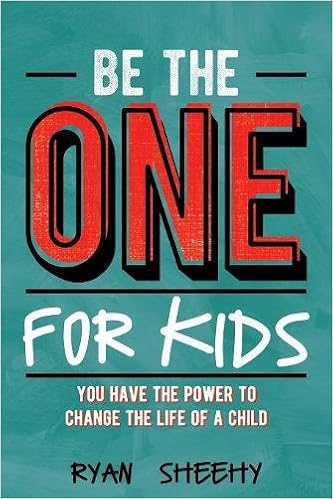
This book was the get-up-and-go that I needed to kick the year off right! You can feel Ryan’s passion radiating from the words on the page. In two-three page mini-chapters, Ryan challenges us to be the one for kids in various ways. Some of my favorites were:

Be The One Who Knows Kids’ Stories

Be The One Who Show Kids How To Have Fun

Be The One Who Puts A Smile on Someone’s Face

Be The One Who Tells Your School’s Story

Be The One Who Stays Positive

Be The One Who Teaches Kids It’s Okay To Fail

Be The One Who Loves The Job

Be The One Who Changes The Game

Each of these challenges encouraged me and spoke to my heart! In fact, just rereading the titles gets me pumped all over again! I was about 1/3 of the way through the book this morning and just finished the book. I am motivated to get back to work tomorrow and continue spreading positivity! Ryan says to “Focus on the good and spread it like wildfire.”

I’m looking forward to continuing that tomorrow, and the next day, and the next…

This book wasn’t without some punches to the gut, though! Ryan speaks to being balanced. He tells a story of when he was interviewing for a position and told them that if they wanted someone to be there in the evenings, they needed to find someone else because he was going to be home with his family (paraphrasing his words, of course). He also speaks to being organized and flexible. At this moment, I am poorly organized at work, and at home. There are stacks of bills, papers, books, Lego bricks, etc piled up on nearly every surface I see from here. I know a big portion of my stress can be attributed to the mess around me. I function much better when I am organized. The disorganization is also a sign of the lack of balance in my life at this point. It seems like I never slowed down this summer for the annual “get my life back in order before school starts” house cleaning party. You educators know exactly which one I’m referring to!

With these two hitting me the hardest while reading, I have no choice but to make these my implementation plan! It was a fairly easy decision. Next week I will be shadowing students and cannot wait to spend a few days in the life of a middle school student! I will choose students purposefully with the goal of being in every classroom and shadowing a variety of skill sets. This gives me time to get organized again at work as well. I will not have classes to plan for, so I can spend my afternoons finishing up many of the projects I have floating around the media center and in my Cloud.

I will be using Google Keep to create a checklist of the things I need to accomplish by the end of the month to be sure I am organizing my time and efforts in the most beneficial manner. Creating checklists has always proven to be of benefit to me, so I’m excited to use Google Keep so I can color-code my checklists and organize as needed. (I’m also planning to share Google Keep with my students as they do not have planners in 7th and 8th grade to keep up with all work that needs to be completed. Some students will use this daily while some will never look again. If it positively impacts even just one student, it’s worth sharing with the student body.)

My other implementation feels like I’m cheating because it was booked a long time ago. In July 2017 when the new itineraries for Fall 2018 came out, my husband and I booked a Disney Cruise for our family. We kept this a secret for almost a year. We’ve been saving since our last Disney Cruise (multiple years ago) and despite purchasing a new home and more medical bills than we ever expected, we were able to book this cruise for November 2018. We will be enjoying all the magic Disney has to offer on our 7-night adventure. Because we booked early (and I scoured the Disney Moms website) we were able to book a massive balcony (about three times the size of the oversized verandah we had on our last cruise) and just booked a few excursions while in the Caribbean. This is going to be my balance time. I am very much looking forward to turning off all devices and disappearing for a week, enjoying my family and spending some much-needed time away with them. My daughters certainly get the worst of me. By the time we get home, I am exhausted and the last thing I want is more questions and silliness. I certainly don’t want to do homework and review sight words or argue about whether the reading assignment is completed. I am excited to give them the BEST of me while we’re gone. We will have fun, relax, and they will get my undivided attention and I am so excited to spend this time creating memories with them!

Be The One For Kids is an extraordinary book! It is inspirational and makes you want to do all you can to reach those kids that feel unreachable. I love Ryan’s passion and energy and I can’t wait to meet him one day! Every Wednesday night at 8:45 pm EST, Ryan hosts a fast and furious fifteen minute chat on each chapter of his book (currently on chapter 17 if you want to join tomorrow night)! You can join these chats (and follow along with educators every day of the week) by using the hashtag #BeTheOne. These chats are inspirational and allow you time to reflect on how to better serve your students. You don’t have to have read the book to be successful in the chat! Ryan hosts a fantastic website that you can access here.

Ryan supports foster and homeless youth through the proceeds of t-shirt sales. (Another example of how fabulous the DBC, Inc authors are as humans!) You can order your t-shirt here (they run for a limited time each month). I definitely recommend the tahiti blue long-sleeved t-shirt with a hood. It’s SUPER soft!

Ryan was a guest on multiple podcasts including the Teach Me, Teacher podcast (access parts one and two) and the Pondering Education podcast. He also chats with Teach Better Talk and #ShareMOEdu. He is constantly sharing amazing stuff on Twitter, so I’d definitely be sure to follow him at @sheehyrw! Definitely grab yourself a copy of his book Be The One for Kids! You won’t regret a second of reading his passionate words. His enthusiasm is contagious! Check out the flipgrid, a collaborative space for global reflections on each DBC, Inc book and share your thoughts on Be the One for Kids! I am ever-so-grateful that Andrea Paulakovich messaged me just a few days after my beginning #DBC50Summer and jumped on board with me! Soon after her first post, she suggested copiloting this amazing flipgrid space! Thank you for letting me be part of this, Andrea!

Book 42 is a book I had never heard of before my research in #DBC50Summer. It would make sense that I’d never heard of it though because it’s about Advanced Placement (AP) classes and my experience is at the elementary and just recently the middle school levels. I’m looking forward to reading this one through the eyes of a non-AP teacher and seeing what I can apply to my students in middle school. Also – the author, Andrew Sharos, is a HUGE inspiration to me on Twitter (I adore him) and I’m thrilled to finally reach his book! We’ve been counting it down for a while, and it’s finally time to take on All 4s and 5s!
 

#DBC50Summer Book 31-40 Recap

Screen Shot 2018-07-07 at 3.54.07 AM

I think I can, I think I can, I think I can! Here we are – entering the final stretch for #DBC50Summer with books 41-50. The official end of summer is on September 22 at 9:54 pm EST. Are you thinking there’s no way I can do it? Are you thinking that this lady has less than 14 days to read, develop an implementation, and blog 10 more books? I have a secret! You’ll have to check out the next ten blog posts to find out my secret(s)!

This journey was born out of creative alchemy. I had probably half of the books published by Dave Burgess Consulting, Inc on a shelf and came home with five more after meeting Dave in April. I thought my husband would flip his lid when I came home with five more books to essentially fill space on a shelf. I’d wanted to read them, but never had the opportunity. There was always something else to do. I also wanted to get back into blogging. I remembered the growth I experienced the summer that I did the EdTechSummer series on my blog. It reframed my mindset and provided an opportunity to be intentional about viewing “outside” technology as tools for use “inside” of education. Sharing it allowed me to expand my PLN that summer as well. Finally, I desperately wanted new ideas for the new school year. After my students shared their hearts in a survey at the end of the year, I realized that I wasn’t doing all I could to make school the very best experience they could ask for. New ideas would motivate, inspire, and excite me as I prepared for 2018-2019 with them. Put those three things in a cauldron and stir it up… you have the ambitious plan for #DBC50Summer – reading, choosing at least one thing to implement, and blogging reflections about each book. See Summer Recap 1 on books 1-10 here and Summer Recap 2 on books 11-20 by clicking here. Summer Recap 3 on books 21-30 can be found here.

Since I’ve been back at work several have asked why I did this journey with #DBC50Summer. I’ve been given “the alien look” from Kids Deserve It. They want to know why I put so much time into it? “What’s in it for you,” they’d ask.

Seriously? What’s in it for me? It just sounds so selfish. Yes, #DBC50Summer was my idea (an insanely crazy one, but mine nonetheless). But it’s not about me. This has never been about me! This has been about my students, my staff, my school by making myself the best educator I can for them! It’s been about knowing there’s a lifeline out there and grabbing hold with all my might. It’s been about relationships. It’s been about bettering teaching practices. It’s been about inspiration and motivation. It’s been about making 2018-2019 the very best school year I possibly can for those around me. It’s not about me. It’s about them. Dave Burgess has his six words that drive him crazy… I guess I have my own version now… five little words.

What’s

In

It

For

Me?

Well… if you really want to know – here’s what was in it “for me” as they say.

*#DBC50Summer is in order of release dates according to authors, blogs, and tweets. This was intentional so I didn’t just grab the books I was interested in reading first and neglect the others. There have been so many books that surprised me – books I probably wouldn’t have read due to content that was seemingly irrelevant to my current position. Now I can look back on the past 40 books and say that they were all relevant.*

31 – Ditch That Homework by Matt Miller & Alice Keeler: Giving students an authentic audience pulls them deeper into the learning. Homework isn’t a bad thing if it’s relevant to the student. It’s not about the philosophy of homework, but the type of homework given. If my homework after reading these books was to fill out a worksheet sharing the title, author, theme, conflict, setting, etc, I would have never even started. I have an authentic audience and am making the content relevant to my world.

32 – The Four O’Clock Faculty by Rich Czyz: Giving teachers opportunity to have choice and voice in their professional development makes a world of difference in attitude and experience for adults, just as giving students choice and voice does the same. Reflecting on the best professional development I’ve had, it’s been voluntary, collaborative, relevant, and has had some sort of follow-up. This book gives oodles of examples to make PD better for educators by taking charge of your own learning.

33 – Culturize by Jimmy Casas: This entire book was an eye-opener. It tore me apart, then put me back together. It’s a must-read for every educator. It makes us take responsibility on the individual level for the culture of our schools. Rather than complaining about our culture, if we start with the “(wo)man in the mirror,” we can make effective change toward a positive environment for students and staff alike.

34 – Code Breaker by Brian Aspinall: I am fortunate to be able to provide my students and teachers with incredible opportunities to develop coding skills through robotics, computer science discoveries, and MinecraftEdu. We have evolved way beyond “Hour of Code” and are starting to work toward coding being about the critical thinking and problem solving. This book gave me multiple ideas for lessons as I work with teachers to create cross-curricular project-based learning opportunities for students.

35 – The Wild Card by Wade and Hope King: Every student has been dealt a different hand in the cards of life. How can we be that wild card for them to make their hand better, not worse? How can we give them the extra boost to get to the next round? There are no excuses for mediocrity. I should want to go all out for my students, doing everything I can to make middle school the best years they’ve ever had. What advantage can I give each student and teacher I work with?

36 – Stories from Webb by Todd Nesloney: So I’m going to write a book. This book is about my epic fails in teaching – from fails with parents, other teachers, administrators, and my students. We all know that hIndsight is 20/20, but what should I do differently next time? What could other teachers learn from my failures? What could they identify with and realize someone else has done something similar? Todd and his teachers, parents, wife, and other stakeholders inspired me with their stories, and I look forward to writing mine. It may never see the light of day in its entirety, only living on my Google Drive. Some of it will likely work its way into a new blog series though! Stay tuned!

37 – The Principled Principal by Jeff Zoul and Anthony McConnell: I have to be the calming voice of reason when others are in a frenzy. When people talk to me when they feel as though they are in a hurricane, I should be the eye of the storm, calm and peaceful. Hopefully I can help with whatever is on their mind, but if not, I certainly don’t need to add to the wind and rain, but be their few moments of sunshine. This was one of the unexpected gems of DBC for me. With no desire to be an administrator, I expected to get nothing from this one. Instead, I identified with almost every single chapter in the book! Don’t let “Principal” scare you; it’s about leadership, and if you’re an educator, you’re a leader.

38 – Google Apps for Littles by Christine Pinto and Alice Keeler: If you get nothing more than logistically managing devices from this book, that’s enough! Christine blows my mind with all that her transitional kindergarten students (four and five year olds) can do! This book is about believing in kids. Give them the opportunities to prove they can do something rather than shutting the technological door as they walk up to it. So many excellent strategies and tools in this book, no matter the age of the student!

39 – The Limitless School by Abe Hege and Adam Dovico: These North Carolina boys brought the house down with their book. Removing limitations by breaking down barriers is what Abe and Adam do. They show you how to do it, too! Another must-read for all who want to improve the culture of their school for your students and staff – and let’s face it. We should all want to improve.

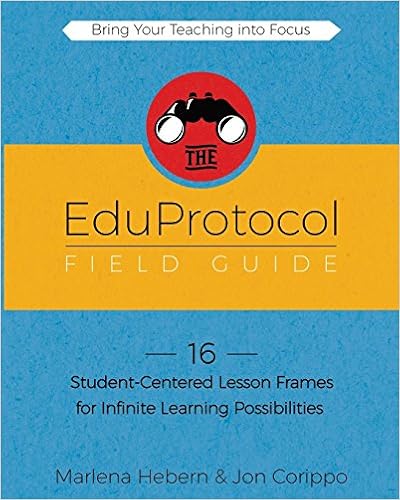
40 – The EduProtocol Field Guide by Marlena Hebern and Jon Corippo: I loved my second trip into this book! Listening to my students’ feedback, I knew I needed to revamp some of my media lessons and I’m thrilled to have read this the weekend before having my first media lessons of the year. Overhauling this week’s lessons, with the help of Marlena herself, to include Smart Starts and fast-paced mini-lessons has me enthusiastic about heading back to work tomorrow! It’s a fresh start and an immediate look into things to come for students and staff from my #DBC50Summer journey.

Well… isn’t that interesting? Every single one of those books gave me something to change, do, or continue doing for my students and teachers. What’s in it for me looks pretty good if you’re a teacher or student that I have the privilege of serving, doesn’t it?

If you want to see what’s in it for you by hopping on the #DBC50Summer journey with me, do it! You don’t have to commit to reading the first 50 books published by DBC! You can read just one! Just one book and implement something you learned. Share your reflections, your implementation plan, and then reflect on it upon completion. It’s that easy!

That leads me to two things I need your help with!

A) The flipgrid that Andrea Paulakovich and I are copiloting is silent. When Andrea mentioned this digital space for global collaboration for all DBC books, I was blown away by her creativity! Still am! Would love to have your thoughts added to the flipgrids. We will release the link to the grid itself once we are finished with the books and blogs. (We’ve also got a couple of awesome things in the works so stay tuned for that, too!) For now, you can use my implementation plan which includes the links to individual topics within the flipgrid!

B) Summer is over in less than 2 weeks. I will finish the final 10 books in the first 50 books published by DBC. I have no plans to stop reading, reflecting, and implementing something from DBC books after book 50. There are incredible books waiting to be read and shared after book 50! So how do we rebrand #DBC50Summer? Help me think! Tweet out your ideas for a new hashtag that can remain relevant no matter the season or book number, or add your ideas in the comments below.

When I started this journey in June, I had no idea what it would look like. I figured no one would ever read these posts, and that it would essentially become a notebook of reflections that I could refer back to as needed when supporting teachers and students. I never, in my wildest dreams, imagined my summer would turn out the way it has. My PLN is incredible. Absolutely, mind-blowingly (not a word, I know), insanely spectacular! I am beyond thankful for each person who has read even one word, tolerated my incessant tweets (and e-mails for those who are subscribed to receive emails for each new blog), encouraged me, and supported me. You have inspired so much growth through your conversations and kind words and I can never thank you enough. But it’s not time to get sappy yet. This isn’t the acceptance speech, because we’re not finished yet.

Just as the first 40 were, these last 10 are for my students and staff. What’s in it for them?

Ten books, less than 14 days… and I’ve got a secret. Let’s go!

#DBC50Summer 40/50: The EduProtocol Field Guide

When I taught in the classroom, we typically had three days before we jumped into the content. During those three days, we covered handbook, policies, had a whole-school assembly to discuss school expectations through Positive Behavior Intervention Support (PBIS), labeled our folders, notebooks, wrote our names in textbooks, and we learned all of the daily procedures for the classroom. The only thing I did during those first few days that was student-led was allowing them to create their own rules for the classroom. Even then, the rules usually landed in one of four areas, so class rules ended up being the same every year. Be respectful, be responsible, be punctual, and be prepared. After 5 years, I can still rattle them off.

It wasn’t until several years had gone by like this in the classroom that we did any culture building at the beginning of the year. This is when we were introduced to Kagan Cooperative Learning and I instantly loved the Class Builders. From then on, I would do activities where students were stranded on a desert island and had to order their supplies from most important to least important, or students would have to decide which of five patients on a donor list would get the next available heart based on the information given. They would have to advocate for their patient to their peers.

In the elementary media center, I would go over care of books, expectations, and allow students to check out books for the first time and we would discuss how I wanted that done. In the middle school media center, I still do the expectations discussion and allow them to check out books, but we don’t really discuss care of books at length. Last year, I revamped the lesson to include rules & expectations shown through memes. I was super pumped about the lesson, but according to my students’ survey results at the end of the year, 25% of the students didn’t even remember the lesson while another 41% said it was just alright. I listened to the students. I knew I needed to do something new with the opening lesson in the media center so I was super excited to see that book 40 was The EduProtocol Field Guide by Marlena Hebern and Jon Corippo!

This book had exactly what I was looking for!!! I had read it back in April after purchasing it from Dave Burgess at an event in a nearby county. (I blogged about how inspired I was after that event here.) So I knew that this book held the answer, but I couldn’t remember specific directions to the protocols. I just remembered being excited to implement the protocols this year, as my media time with students was already coming to a close when I discovered the book last year.

One of my very favorite things about this book, (other than the actual protocols, which are on fire) is the banter between Marlena and Jon in the margins! Their personalities totally shine through the pages! I also love that there is plenty of space to write notes in the margins of the page! This is truly a manual to keep fingertips away when creating experiences for students!

In the 100th episode of Kids Deserve It with Adam Welcome and Todd Nesloney, Adam asks Dave who is “inspiring him right now”. His answer? See the video below.

It is that very idea of immediately implementing that has me still awake after 2:30 in the morning completing book 40 and writing this post. I’m so excited about the overhaul in my media lesson for this week that I had to blog it instantly. I can’t wait to get feedback from the students to learn their reaction to the changes!

Reviewing media expectations won’t be done with a lecture this year, not even a slide deck with memes! Instead I am creating a review game in Quizizz where students will guess my response to various scenarios. (This game will be linked in the implementation blogs to follow in the coming weeks.) Students will play the game independently, then we will review missed questions and they will immediately play the game again with the same questions (although likely in a different order). This Smart Start is called “Fast and Curious”.

A Smart Start provides a warm-up of sorts for the EduProtocols to follow. It shows students the up-tempo pace (I love this concept of shortening the amount of time given to complete assignments/activities/protocols in order to create a sense of urgency rather than procrastination!) It’s also just fun, and something outside the expected “first day” routines! Jon & Marlena have their acronym game on point in this book! Several examples of well-used acronyms are available in The EduProtocol Field Guide, with one of them being the Smart START guiding principles.

The guiding principles of Smart START are Smile (keep it fun), Teach (finish on time), Activities (developing the culture and practicing tech skills that will be needed), Routines (structured, but fluid), and Target Barriers (students are already learning one another’s names and finding similarities between themselves and their classmates)!

After completing “Fast & Curious”, I will have students put the Book Fair dates in their phone calendars (or planners) as the next media class is Book Fair! Then we will have a discussion about my reading goals this summer. I am so excited to tell the students about #DBC50Summer and highlight some of the posts from authors of books and share the hashtag with them so they can see the insane amount of learning I completed this summer in order to make school better for them! From that conversation, we will transition into their own reading goals. They will complete a Google Form sharing their goal with me and their teachers along with rationale for their goal. Then they will move through three fast-paced stations! Stations will be as follows:

  1. Flipgrid & Five Words Form: Students will share their reading goal (only visible to the student, me, and their ELA teacher) and give themselves a little pep talk (think Kid President style). This video will be revisited in October when I see them to motivate them to continue pushing toward their goal. In November, they will create a video response sharing whether they met their first quarter goal or not. They will then identify a new goal for 2nd quarter and record it. This will happen throughout the year. Also in this station, students will complete a Google Form survey about what five words describes their core classes (math, ELA, social studies, science) and their encore classes (art, band/chorus, pe, computer science discoveries, project lead the way 1 and 2). These results will be compared to the responses from teachers about what they hoped students would say about their experience in their classes.
  2. Book Checkout: Students will be encouraged to check three books out of the media center and reminded that they will return to the media center in two weeks to exchange books. Soap box moment: Students can select ANY book they’d like from our shelves. I don’t care if it’s graphic novels, Diary of A Wimpy Kid, Dork Diaries, or Shakespeare. I just want them to get something they are interested in and READ!
  3. Club Information & Sign-Ups: I sponsor multiple clubs at my school, both in the afternoons and in the mornings. I always look forward to having students engage in these clubs and getting to know them in a much more informal manner. I will unveil the 8th grade puzzle and allow 8th graders to sign up to work on it, as well as share information in our Google Classroom about Makerspace Managers, Innovation Engineers, Between the Lines Book Club, Battle of the Books, and Virtual Reality. Students will signify interest in any of the clubs they’d like by signing up on one of the whiteboard around the media center (also giving them time to move and check out any new furniture, books, etc they haven’t yet seen in their space). Those students will have permission forms sent home the following day.

After stations, we would have moved into the “Things That Rock” Smart Start, but the power of Twitter is tremendous! Check this out!

I posted the lesson outline on Twitter.

To which Marlena replied:

I pointed out that I only see them once a month, to which she replied:

Yes… yes I did just collaborate with the author of the book while planning my lessons for the week (my implementation plan). <insert squeal here> I’ve just got to reiterate how incredible the authors of Dave Burgess Consulting, Inc are! They are tremendous educators, amazing authors, and most importantly, exceptional humans. So following Marlena’s advice, I am going to move Things That Rock to the end as an additional activity if needed. I will move the What People Think meme creation up as a school-wide collaborative document. Each student will be given a slide and they will reflect on the changes in the library and what they feel they can expect from their time in our media center.

Upon completion, we will complete the Smart Start of “Worst Preso Ever” in which we watch a short video about poorly designed presentations and they intentionally create a slide in a poorly designed presentation of their opinion of their first impressions of the school year.

I am so excited to implement this plan (created with input from Marlena – WOO HOO) for The EduProtocol Field Guide! Truly, I am hoping to eventually use all of the Smart Starts and EduProtocols this year, but for the purpose of #DBC50Summer, my implementation will be these first lessons with every student in the school this week! Follow the incredible conversations surrounding this book on Twitter using the hashtag #EDUProtocols! Marlena and Jon are both very active on Twitter and I highly suggest following them at @mhebern and @jcorippo, respectively. There are many podcasts featuring the authors and/or the book, so I would suggest just using “the power of the Google” to listen to them (or watch them on YouTube). You will definitely want to check out the EduProtocols website! As always, check out the flipgrid and share your favorite of the #EDUProtocols or Smart Starts! Big thank you to Andrea Paulakovich for allowing me to co-pilot this awesome global collaborative space for all DBC, Inc books!

This post wraps up another set of ten DBC, Inc books! Wow! Summer Recap 4 is coming soon, as well as book 41! I wonder if it will Be The One you’re expecting next…