#DBC50Summer 37/50: The Principled Principal

Honest is always the best policy, right? That’s what I’ve heard anyway. So Jeff, Anthony… don’t take this personally…

I had absolutely zero interest in reading this book.

There… I said it.

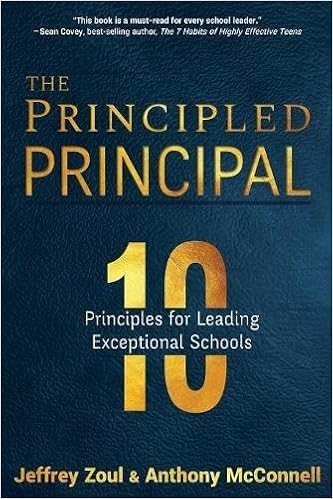
It didn’t “fit” with my educational goals. It wasn’t “in my wheelhouse” so to speak. I have never wanted to be an administrator. There’s not a bone in my body that ever wants the pressure and stress that is put on administrators of public schools. (I say public because that’s all I know and I’m not going to assume to know anything about other schools.) Naturally it would make sense that a book called The Principled Principal would be the last educational book I’d pick up. This is a perfect example of why I wanted to do my personal challenge of #DBC50Summer in order of release date. Otherwise… let’s be real (see what I did there, Tara?)… I would have missed out on this gem because I would have never read it. In fact, the only reason I actually read it rather than “fibbing” was because I wanted to the fidelity of #DBC50Summer to remain intact. I want to be able to say that I have actually READ each of these Dave Burgess Consulting, Inc books. So I cracked open The Principled Principal (book 37) by Jeff Zoul and Anthony McConnell and was blown away by what I read.
I value & respect my administrators very much; I have been blessed to work for exceptional principals and assistant principals. My first principal interviewed me THREE times before offering me the job. Made sense though – I was only 20 years old, fresh out of college with zero experience, and was not from the area. I wouldn’t have hired me. She was every breath of that school. I cannot say enough great things about her. When she retired, it didn’t matter who came in as principal because they didn’t stand a chance filling those shoes. Buddy the Elf could have become principal and served us hamburgers with syrup with all his contagious Christmas spirit and it still would have been a tough sell. I left that school midyear to begin my career as media coordinator. (You know that when a ‘singleton’ position opens up, you jump on it.) The principal that hired me for that job also took a huge risk with me. I had not yet finished my Master of Library Science and had (again) zero experience in the media center (nor with any grade level other than 5th grade – and 1st grade as my student teaching). She was moved to another school just 6 months after I started my job there. Then I began a phenomenal relationship with the new principal and we both were devastated when I was moved to middle school to pilot a new position for our district. She was happy for me, and I was excited for the challenge, but leaving her and our working relationship was heartbreaking. The principal I work for now is a forward thinker who is constantly pushing us to be our best for students. Best part (for me anyway)… she was an instructional coach. So she knows what my role is like and supports me at every opportunity & challenges me to see all points of view. I have worked for nine assistant principals in 13 years!

Being friends with many of these administrators, I see the toll that running a school can take. I see the exhaustion and sacrifice that is made by administrators on a daily basis. I can confidently stand (errr… sit) here today and tell you that I have absolutely ZERO intention to ever become a building level principal. Others are gifted with that calling, so have at it. I respect you and look forward to working with you to help students and teachers in the building succeed. I will be your confidant, your sounding board (we all need one), and you never have to worry about me wanting to take your job (HAHAHA)!

This book is powerful. I’m in a hurry to allow my principal to read it; not because she needs the principles for development, but because every page I read reminded me of her. I want her to see that what she’s doing is phenomenal and forward thinking. That she fits in perfectly with the 30 principals that share their story within these pages. I loved the 3-2-1 format at the end of each chapter. It reminded me of Teach 4, Lead 4, Learn 4 at the end of each chapter in Start. Right. Now. (co-authored by Todd Whitaker, Jeff Zoul, and Jimmy Casas). In 3-2-1, the authors share 3 stories from phenomenal principals (like North Carolina’s own Derek McCoy and Sean Gaillard – both friends of mine!), 2 resources to check out that further your learning from the chapter, and 1 culture crusher that relates to the principle covered in the chapter. I’m not going to spoil the fun of the 10 Principles – get your own copy to find out what they are!

Several (and I do mean a TON of) quotes stood out to me as I read.

The idea of “Have-To’s vs Must-Do’s”

“Prioritize innovation as a non-negotiable in our schools.”

“If we cannot truly understand where people are coming from and what is important to them, we cannot lead them.”

“You cannot control them, but you can control yourself.”

“You are the most important person you lead. We cannot successfully lead others until we successfully lead ourselves.”

“Students who are prepared for…learning expectations through daily…learning experiences designed by…educators who do not fret about standards can knock any assessment out of the park.” (Preach, Hallelujah, Yessir, and Amen)

There are so many other quotes I could add, but let’s look at topics.

I love the section where Jeff and Anthony talk about your school library being one of the places going out of date the most. Seems a bit ironic being that I work in a media center, doesn’t it? However, it’s totally true! Our media centers must either evolve or go the way of the dinosaur. I, for one, choose to evolve. The space in our school is student-owned, bright and cheerful, a space for collaboration, constantly filled with classes, and includes a tabletop game section, 8th grade puzzle (which has already become a tradition over the 3 years I have served there), minecraft lab (which will double as esports league computers coming soon), makerspace, virtual reality lab, flexible seating and tables on wheels, and I’ve recently transformed my office into a small group meeting space. Oh… and it has books. Lots of them. Notice that isn’t all it has though. It’s not a book warehouse, but a space for thinking, creating, collaborating, and brainstorming.

Jeff and Anthony also encourage us to brainstorm five words that reflect my core values. This reminded me of my P is for Pirate by Dave & Shelley Burgess implementation in which I chose 5 words to describe my classroom (media center).

My 5 core value words are empathy, responsibility, growth mindset, consistency, and drive.

Neither of those are my implementation for The Principled Principal. My implementation comes from the disaster of a day (read that as week, please) that I’ve had. It’s chromebook season at the STEM magnet middle school that I serve. Do you know what that means? I am distributing 400(ish) chromebooks in a week, revisiting expectations with every child, discarding old/broken chromebooks and replacing with new-to-them chromebooks, which means the spreadsheet needs to change. It’s 123 new chromebooks for 6th grade that need to be “bagged and tagged”, teaching those students how to use Google Drive, create a WikiProject in our LMS, and understand policies behind acceptable use. It’s matching appropriate chromebook models with new students and brief troubleshooting when students can’t log on to our server. Y’all… this is a stressful time. I don’t typically ask for help, nor do I accept help when it’s offered. It usually takes more time to explain my convoluted process than to just do it myself. I’m also a bit of a perfectionist, so I go behind the other person anyway and double-check. (I know, I know… I need to let it go. But I just can’t.) If I’m going to issue a chromebook to a student and something happen where we have to charge the family for something, I want to be able to 110% vouch for the condition of the chromebook when it was placed in the student’s hands.

You know the Snickers commercial tagline? “You’re not you when you’re hungry.” Well, I’m not me when it’s Chromebook season. I’m crabby, quick to argue, slow to listen, and generally just want to be left alone. Give me Pandora, my label-maker, my spreadsheet, and a scanner and let me do my thing. I have taken frustration out on more than one person this week. I have certainly not been a contributor to any resemblance of positive culture in the past 10 days. Today was the breaking point. As soon as the first 6th grade class came in for WikiProject training chatty and not listening to instructions, I lost my cool. It was ugly. It was only 9:15 this morning and I had already reached my boiling point.

Now I know better. I know to project directions on the board. I know to set expectations from the very beginning. I know that the quieter I talk the quieter they will get. But nope… I yelled the directions (very quickly, might I add). I proceeded to show them that I was in charge of this space, so there (humph). And I did this class after class after class today.

What in the world was I thinking? That’s not the way we operate in our media center. I don’t talk to students like that. I focus on building great relationships. By the time the 6th period class rolled around (I’m ashamed to say that it took me until 1:45) to get myself back together. As they entered, I was much more organized and my voice was calm. I praised students and we discussed common mistakes made throughout the day. I started off by letting them know I had been having a really rough day, being completely vulnerable in front of my students. I let them know up front that none of that was their fault, and that I was really working to get myself back together and find “happy Mrs. Ray” and invite her back to school.

Sixth period went so smooth. I enjoyed it, and I feel like the students enjoyed it. The feedback they were giving me with their attentiveness and enthusiasm matched my gut instincts. Now how much different would the rest of my day been if I’d just been vulnerable and let them know up front that I was stressed out from Chromebook roll-out. What if I asked for help when I felt overwhelmed? What if I allowed others to do something as minuscule as removing the new batteries from their plastic wrap? (My daughters ended up doing it when they got off the bus, and they loved it. Weird!)

My implementation for this book comes from a mix of two principles. The People Principle and the Harmony Principle. I need to be the one with a calming effect, not the one who stirs the pot of negativity by adding my complaints. I need to remember that as an instructional coach, others feed off of my attitude. I’m not saying that I will fake it, because I think they need to see me struggle, too. There’s a camaraderie that is built through these struggles, but I also need to work on my actions meeting my words in my high-stress times at work.

I was able to pull so much from this book that I was so hesitant to read. I am so thankful to have read it and certainly feel that if you are a school leader of any kind, not just “principal” you should grab a copy of this book for yourself! These principles are principles of exceptional leaders, not just exceptional principals. I really enjoyed The Principled Principal and look forward to sharing it with others.  You should also follow along with the conversation on twitter using the hashtag #10Principles, as well as check out the website here! There are book study resources on the website, as well as my favorite video seen below. (So much truth!) You can also check out the individual author websites/blogs for Anthony McConnell and Jeff Zoul.

For a preview of the book (whaaaat?!?! Right?! Dave Burgess Consulting, Inc has an updated website which allows you to preview every.single.DBC.book! For REAL! – I did it again, Tara!), click here & scroll down to the very bottom of the page. But beware, you’re going to want to buy your own copy because starting it is like opening a can of Pringles.

Finally… here are the very few tweets I managed to get out there. I’m trying to stay off social media as much as possible so I can get these last few books read and not be distracted. You will likely see less tweeting and #BookSnaps from here on out, simply because I’m running out of time. I have a deadline to meet (September 22 at 9:54 pm EST, but who’s counting). I refuse to let it go by without finishing #DBC50Summer!

Flipgrid is available here! Thanks Andrea for an incredible idea and so blessed to copilot with you!

Next up in #DBC50Summer is the final one (for now) from our favorite Google Guru (yes, I call you that all the time, Alice), Alice Keeler! She teamed up with the amazing Christine Pinto to share the message that even our youngest learners can use technology to showcase their learning! I love this, and so wish I’d had it when I was working at the elementary level! Check out Book 38 from the DBC, Inc powerhouse – Google Apps for Littles.
#DBC50Summer 36/50: Stories From Webb

As I read book 36, I knew exactly what my implementation will be and I am terrified. Not just the butterflies and jittery anxiety, but hair-standing-on-end, sweating, dizzy, gut-clenching terrified. I’ve known what I wanted to do since I was a young girl. And now it’s time to share with the rest of you.

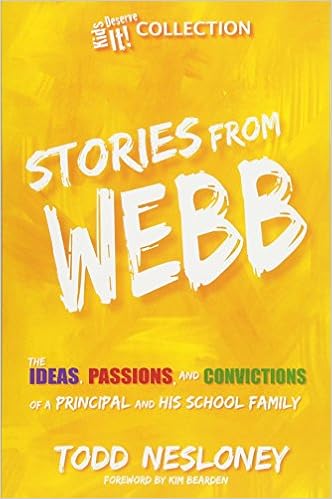
I don’t have an anecdote to share today, which is pretty dang ironic if you stop and think about it. I just have a plan; the implementation that has been weighing on me for a while. Reading each of the first 50 Dave Burgess Consulting, Inc books has been an amazing journey; one that has been filled with so much support, encouragement, motivation from my Professional Learning Network. Book 36, Stories from Webb by Todd Nesloney (co-author of Kids Deserve It) confirmed one of my deepest fears and my greatest hopes. Through reading this book, hearing the voices of Todd’s staff of Webb Elementary, tears running down my face or smiling from ear to ear, I am acutely aware of the effect of words on others. Words can inspire or tear down, portray compassion or apathy, impart wisdom or uncover ignorance. Writing has always been part of my life. I have never enjoyed it while doing it, but once the process was complete, I always looked back and was thankful I completed it.

As a young girl, I would sit in my bedroom and write stories, three or four chapters long. It was always realistic fiction, but I couldn’t get the characters out of my head until I wrote about them. As a middle schooler, we were required to keep a journal and choose from hundreds of prompts to write an entry each morning. I shared that journal with some of my family who loved it (although I truly believe they are a bit biased). If I’ve ever needed to express my thoughts on a deeper level, writing has always been easier than speaking. When I’m thinking through a problem, I scribble a pro/con list. Through #DBC50Summer, I have realized that while the books are tremendous, and I do mean fantastic, my growth has only been in part because of the words written by these amazing authors. The majority of my growth has come through the written reflections on my practice and how I can improve through an implementation plan. As an adult, I dream about characters and their stories for multiple nights, then they just vanish (likely because I’m not writing them down anymore). My mom has always told me that she envisions me writing children’s books. Looking back, it’s easy to see why she would think that.

Looking back is exactly what I have in mind. Hindsight. How many times have you wished you could go back in time for a do-over? It might only be 5 minutes, or even 20 years, that you’d like to erase, but the common theme is that we’d all like to have a redo in some moments of life. Reflection is such a major piece of education. Without reflecting on our practice, and on the stories of individual students, parents, colleagues, administrators, we become stagnant. I love that Todd’s school family shared their stories within the pages of Stories From Webb. It was so powerful to read and connect with each one.

I’ve alluded (several times) on Twitter to writing my own story.

Are you seeing a pattern? My implementation? I’m going to write that book. A dear friend of mine and I have been tossing around the idea of writing an educational book for a couple of years. I definitely want to do that, but it doesn’t feel like it’s my story. It’s more of a how-to with resources. In one of those “shower moments” one day (they’re legit, by the way – check out Tara Martin‘s #3minPD on this topic), I just knew I wanted to write my story about my epic fails and how I responded to them. Think of it as a “what not to do” manual of sorts. Then, with more experience and hindsight, share what I should have done and what I would do in the same situation now.

PS… it will be 20 chapters long… because you know. Hindsight is 20/20.

So now what? Todd has put the final nail in the coffin, so to speak. At the very end of his book in the acknowledgements section (yes, I read the forewords, dedications, and acknowledgements of every book), he wrote this to the readers:

I hope that you choose to be brave, love wildly, take risks, embrace the challenges, and most of all, remember that every moment is an opportunity to be better. It’s a scary thing, but just like my team and I did in this book, we need you to share your story! Write a blog, tweet it out, share it on Facebook, but get out there and share your brilliance with the world. We need your stories too.

~Todd Nesloney, Stories From Webb

I hear you, Todd. The stories of your staff have inspired me; your stories touched my heart. You make me believe that even thought it’s insanely scary, I should put my story on paper. I will share my story. Even if it’s never officially published, I’ll share parts of it on my blog. Possibly the next blog series? #HindsightEDU? We’ll see. For now, I need to finish #DBC50Summer, read and blog the amazingness of books 51-56 (and the newest one by Tisha Richmond, Making Learning Magical – cannot WAIT for Tisha’s book coming mid-September), then no more putting it off. I keep making excuses for myself. I know that when I add this to my implementation plans for #DBC50Summer, I remove the ability to make excuses.

For more stories from incredible educators around the world, jump into the #TellYourStory chat with Todd on Wednesdays at 8:30 pm EST. You can also follow along with others 24/7 using the same hashtag (As a note, #StoriesfromWebb as well as #KidsDeserveIt are also used to share stories)! Visit Todd’s website and grab a shirt while you’re at it! (Shirts are available the first week or so each month.) If you do nothing else, check out Todd’s amazing YouTube channel for episodes of #TellYourStory! Todd has hosted, as well as appeared as a guest on multiple podcasts. I’d suggest just doing a Google search for all of that awesomeness. This book is definitely worth picking up a copy! It’s one of those that you can randomly turn to any page of the book and be inspired and remember your why. It eliminates the feeling of loneliness that educators can sometimes feel as it reminds you there are others fighting the good fight, too! Go ahead and get your own copy; hurry!

As always, there is a flipgrid for global collaboration and reflection. Thanks to Andrea Paulakovich for allowing me to copilot this insanely awesome idea she had! So fortunate to have met her through #DBC50Summer!

Book 37 is The Principled Principal by Jeff Zoul (of Start. Right. Now.) and Anthony McConnell. This is one of the longer books. As I have zero interest in becoming an administrator, I’m interested to see how I might be able implement this one. I like a challenge, though. So… let’s get started.

Feel the need to share a little awesome sandwich with you (posterity and all, you know) – the time Todd came to #ncties15 and I got to meet him & chat with him & Jennifer LaGarde.


#DBC50Summer 35/50: The Wild Card

One of my most (positive) vivid memories of my childhood was camping with my family. Now I’m not talking about tent camping – no, thank you! (I slept in a tent once at a birthday sleepover after a bonfire when I was almost 17… never again. Never.) No, we stayed in a fifth wheel camper set up at a campground on the mountain about an hour from our house. There were several families from our town that owned campers there and we’d spend many weekends during the summer enjoying the outdoors and community at the campground. My mom and dad were still married, so I couldn’t have been older than 10 or 11, but the memories stick with me like glue. The best part? They let me stay up until all hours of the night playing the card game called Spades with the other campers there in the campground community house.

Creating memorable experiences that stick like glue is what we want for our classrooms. Playing those games didn’t have a thing to do with school, curriculum, content… or did it? I learned critical thinking, strategy, probability, the power of failure, thrill of victory, and how to do it all while absolutely exhausted, refusing to admit it because my parents would make me go to the camper and get some sleep. Perhaps those nights are what drive my love for games now. That’s a thought for another day, though.

For now, let’s discuss book 35 in the Dave Burgess Consulting, Inc line of incredible books. (By the way, they just released a tremendous new website for DBC, Inc! Check out the latest and greatest features here. Spoiler: features include previews of each book, how to follow along with authors/book communities in multiple social media/blog accounts, and how to purchase autographed copies of book like Teach Like A Pirate. Subscribe and be entered for a chance to win a free book each month!)

Book 35 is called The Wild Card and is co-authored by Wade & Hope King, a husband & wife team. (This is the third instance of a husband/wife collaboration in DBC, Inc. P is for Pirate co-authored by Dave & Shelley Burgess, How Much Water Do We Have? written by Pete Nunweiler with contributions from his wife, Kris were the other two.)

I’m going to admit something that many educators might find shameful. I have never read a single Ron Clark book. (I know… I know. I’ve heard.) I’ll take it one step further…I’ve never watched the movie either. (My aunt is going to be so disappointed when she finds out I never turned it on when she sent me those text messages.) I’m totally not slamming Ron Clark. I love what he has done for education, and I think The Ron Clark Academy is the bees’ knees. Can I redeem myself by saying I read this book and loved it? Not realize the connection? Hope & Wade King work at the Ron Clark Academy; Hope is a reading master educator and Wade is a social studies master educator and Director of Curriculum and Instruction. Before we dive into the book, you should know you’re going to want your own copy – I’d suggest a physical copy so you can highlight and write all over it. You’ll want to. Here’s a link. You’re welcome.

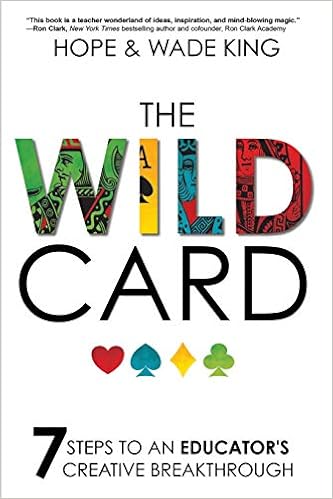
This was another of those books where I didn’t come up from air while reading. I really didn’t need to… it was an engaging read. It had a perfect mix of guide book, personal experiences, and excellent ideas to challenge you in the classroom. The book is divided into three sections – Wild Card, Creative Breakthrough, and Toolbox.

Wild Card talks about the metaphor of being the wild card for your students. Every student is dealt a different hand, and the wild card can either make or break you. Hope & Wade challenge us to be a wild card that makes the hand unbeatable. They discuss the Joker in one chapter, which totally resonated with me. I battle with self-doubt often, and I, too, have panic attacks. Like Hope, I strive for perfection and that perfectionism has been the primary source for many anxiety attacks in my life. I never want to be a disappointment; it’s one of my biggest fears. Others fear death or public speaking… my biggest fears are fire, having to choose which of my daughters to save in a catastrophe (yes, truly stresses me out), and being a disappointment to those I love and respect. So, Hope, sister… I feel you!

The second section is where the magic happens! This is the step-by-step guide that you’ve always wanted. I would highly recommend reading a chapter at a time, marinating on that one topic for a couple sleeps, then moving to the next chapter. Rinse and repeat. That will be hard to do because it’s written in a way that’s so dang easy to read that you’ll just fly through it. If that happens, go back to section two and start with the awareness chapter; take it slow. Reflect. I know I’ll be going back to this and reflecting myself.

The third section… we’ll call this one your new best friend. Did you love the section on hooks in Teach Like A Pirate? The section of mini-games at the end of Explore Like A Pirate? You’ll love this toolbox, too! Just trust me!

I feel as though I’m not giving away too much information by sharing the snappy wrap-up at the end of the book. One statement from each chapter is given by Hope & Wade. The statements in and of themselves are powerful, but please believe that the details in the book that back up these statements are astounding.

  1. Be the wild card.

  2. If you argue for your limitations, you get to keep them. (WOW!)

  3. Don’t listen to the Joker.

  4. Always know your WHY.

  5. These things are free: a smile, passion, and enthusiasm.

  6. Lunchtime is a creative opportunity.

  7. Make them want to come to class.

  8. Just do you.

  9. Don’t stop for roadblocks.

  10. Spread the magic.

While reading there were several things that popped out to me as possible implementation plans. A few ideas were to record myself teaching, then watch it and reflect, and rewatch it while muted focusing on my body language (Genius, right? Great idea, Kings!), continue redecorating the media center to meet my own passions because students are interested in seeing any changes happen (truth – check out phase one of the media makeover), maintaining smile, passion, and enthusiasm every single day because they are contagious, and even go see Hamilton! In all seriousness, I have seen this Broadway show advertised in more places than I can count in the past six months. It’s even coming to my state twice over the next few months, and both stints are sold out.

However, my implementation came down to one thing that I connected with as it also aligns to my school’s vision of encouraging the love of lifelong learning in our students. I’ve completed genius hour projects in the media center before, but only a class or grade level at a time and only “mini” projects. They looked like this: “Research all you can find on your chosen topic for 20 minutes, then create a 5 slide presentation to share with your friends.” While that was a great starting point (see my first ever genius hour attempt reflections here.) it wasn’t really what genius hour was intended to be. I’m looking to expand this idea of genius hour to a more open-ended platform. I’ve already committed to having an Innovation Club after school as my implementation of Pure Genius, but I want this to be open to all students. This is one of those projects that relies on student buy-in; no grade, no accountability, no assigned due date. I just want to open up the opportunity to learn about whatever they’d like to learn about and offer the media center and supplies to create something they can share with others. That may be a vlog or blog, podcast, green screen video, stop-motion animation, lego creation, coding endeavor with scratch and the Arduino or MakeyMakey. I’m not sure what they’ll come up with, but the sky is the limit. I just need to offer the space and time. I want it to be completely invitational so students don’t feel as though it’s something else they have to do, but something they get to do. I’m going to work through this in my head and will let you know how it all goes as it unfolds. I just know I want this to happen and as Hope & Wade would say, there are no excuses. If I’m considering it, I need to just do it. So… here we go.

You can find more of Hope & Wade King on their website here. You can also be inspired by them in person at the Get Your Teach On conferences. I’d love to attend the national conference in Texas next summer (fingers crossed)! Hear Wade talk with Vicki (@coolcatteacher) Davis on the 10-Minute Teacher Podcast, then listen to her chat with Hope! Don’t forget to get your copy of The Wild Card. Use the hashtag #BeTheWildCard to connect with other educators reading this book! You can also connect via flipgrid. Andrea Paulakovich had a spectacular idea at the beginning of the summer to create a virtual space for global book studies, so here it is. She and I copilot this space and would love for you to contribute as you finish books! (Also, look for something epic from us soon… just saying.) Andrea also recently wrote a blog post on The Wild Card! I love how she puts her own spin on #DBC50Summer – check it out here!

I didn’t do a lot of tweeting with this book because I was so immersed in what I was reading that I kept forgetting to stop and do a #BookSnap – oops!

Up next in #DBC50Summer is a book from an author you already know and love! Todd Nesloney (of Kids Deserve It) and the amazing educators of Webb Elementary bring us Stories from Webb! I’ve read many of the stories here, but all out of context. Sometimes I open it like the old school Chicken Soup books (Man, what a series!) and just pick a story and read it for inspiration. Now I get to read the entire thing! Looking forward to diving into book 36!