#DBC50Summer 50/50: The EduNinja Mindset

No clever anecdote tonight. Just want to share the awesome from book 50. And I do mean AWESOME.  This book was the PERFECT book to end #DBC50Summer with; it was totally worth the wait! The 50th book from Dave Burgess Consulting, Inc was released on June 10, 2018 and sparked a Twitter celebration among the Pirate crew! All 50 books were given to one lucky winner – Mike Mohammad! (He’s a super awesome guy and you should go follow him!) The fiftieth book in the DBC dynasty is The EduNinja Mindset by Jennifer Burdis.
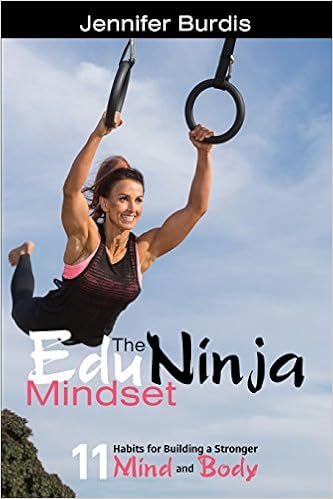
Jen Burdis created a masterpiece with The EduNinja Mindset; she really did. This book is inspiring, authentic, and paradigm shifting; it’s exceptional. I wasn’t really sure what to expect when I cracked the cover. I thought it would be a book on exercise and taking care of yourself physically and mentally. It’s so much more, y’all… It’s about goal-setting, perseverance, grit, determination, and doing amazing things despite your fears, setbacks, and insecurities. Each chapter was so powerful that I’m literally going to share chapter-by-chapter my takeaways. This format is a bit different for #DBC50Summer posts, but if I don’t do this – I’ll literally write another book reflecting on what I have gained from this book.

Chapter 1: An EduNinja Overcomes Obstacles

Amazing Quote: “Would we really wish for an easy life when our greatest learning comes through overcoming obstacles?”

Connection/Reflection: Give all students an environment to shine. Jen shares with us her struggles through school with undiagnosed dyslexia. Her story breaks my heart and makes me want to attack my lessons again to be sure all 400(ish) of my students can be successful with any experiences their teachers and I co-create! It’s also important to note that “extracurricular” activities aren’t always “extra”! For some of our students, it’s everything. It’s their reason for staying in school and the only place they feel success. We should be encouraging extracurriculars (like sports, clubs, academic teams, etc) for students who struggle to perform in school, not punishing them by taking it away. Finally, being first feels good. Jen’s grandma and dad helped her understand that “being the first to do something – even something others say is crazy or impossible – should be celebrated.” This seems exceptionally fitting given the fact that this is the final book of #DBC50Summer. I’m not the first to read the first 50 DBC, Inc books, but I am the first that I know of to commit to reading, reflecting, blogging, and implementing at least one thing from each book. And it feels good.

Chapter 2: An EduNinja is Reflective and Protective

Amazing Quote: “Journaling helps you look for patterns in your life and behaviors, strengthen your ideas, and develop new ones so you can learn more about yourself and the world around you.”

Connection/Reflection: Be reflective, every single day. These last few days of #DBC50Summer have created the most growth for me. Through reflecting and blogging every day, I have learned more about myself, my inner voice, than ever before. Now that #DBC50Summer is coming to an end, I intend to do something for me! Jen says it’s ok! In fact, she encourages scheduling time every day for myself! That’s tough to think about with so many demands, but we have to take care of ourselves before we can take care of others. (In case you didn’t realize it, as educators, we spend a lot of time taking care of others. Which means we need to spend a lot of time taking care of ourselves.)

Chapter 3: An EduNinja Sets Goals with Soul

Amazing Quote: “You don’t have to love the work you put into achieving a goal, but you do have to be passionate about your goal is you want to be successful. Goals with soul are the ones giving you purpose, the ones you stay focused on, the ones giving you vision even when things get tough.”

Connection/Reflection: #DBC50Summer was definitely a Goal with Soul! However, I enjoyed every minute of the work I put into achieving this goal. I have been insanely passionate about this journey and am so thrilled to see it through! I mentioned in Allyson Apsey‘s The Path to Serendipity that I struggle with my own insecurities. Jen gives an example of the perfect solution – affirmations. If we say kind things to ourselves enough, we will start to believe them. These affirmations lead to our setting bigger goals for ourselves. Some of my biggest core values are drive and determination. I’ve always been one that will push the envelope. I like to do what’s impossible. It’s fun! (That’s what Walt Disney says, too!) Finally, turn your struggles into strengths! I struggle with overanalyzing every conversation I have and every decision I make. Turning this struggle into a strength, I can say that I am “detail-oriented and focused on making the best decision for all involved.”

Chapter 5: An EduNinja Lives on Purpose

Amazing Quote: “What are you training for?”

Connection/Reflection: One of my implementation plans for this book comes from this chapter. I will be creating a personal, professional, and familial mission statement like Jen has done. This will better aid my decision-making and eliminate things that do not agree with my core values included within my mission statements. I love what Todd Whitaker says (as quoted in The EduNinja Mindset), “Don’t tell the world your mission statement. Show the world you’re on a mission.”

Chapter 5: An EduNinja Embraces Imperfection

Amazing Quote: “Our goals aren’t big enough if we reach all of them.”

Connection/Reflection: Jen shares her thinking as she reflects on the painful failure of her performance on the seventh season of American Ninja Warrior. She writes, “Shouldn’t all of our goals be just out of reach?” That’s big stuff! If we can achieve them all, they aren’t really goals, are they? Reaching for goals that are out of reach will sometimes result in failure. And that’s ok. Failure gives us the opportunity to learn. If we succeed at everything we do, we’ve just got a lot of success, but no life lessons learned. I love the quote that I’ve seen around the big box stores on home decor lately, inspired by John Maxwell’s book of a similar name – Sometimes I win, sometimes I learn. Finally, don’t be afraid to ask for help. Vulnerability is valued and asking for help is not failure. Asking for help is a stepping stone to success.

 Chapter 6: An EduNinja Overcomes Fear

Amazing Quote: “When your purpose is stronger than your fear, you won’t give up.”

Connection/Reflection: Jen asks a hard question in this chapter. “What holds you back from setting bigger goals?” I had an insane fear (nearly paralyzing at times) of public speaking. Notice I said “had”. I overcame this fear by presenting… over and over again. I have never presented at a national conference, but it’s on my list of things to do in 2019. That’s one of my “bigger goals” that Jen refers to in her question. I have been a featured workshop presenter at my state’s ISTE affiliate, North Carolina Technology in Education Society, for the past 3 years. Before each session, my skin is clammy, I am a ball of nerves, and my stomach rolls. I can’t sleep for several days before the session because I have nightmares of all that could go wrong. If the nightmares don’t show up, I’m tossing and turning with my brain overanalyzing the imaginative play-by-play of the session. Once I start, I feel much better. However, as soon as I finish, I retreat to a quiet space (usually back to my hotel room) and decompress. Setting bigger goals scares me; the idea of speaking at a national conference terrifies me. However, my purpose is stronger than my fears.

Chapter 7: An EduNinja Fuels with Good Nutrition

Amazing Quote: “Eating healthier has changed my life.”

Connection/Reflection: That quote is so powerful to me because I’ve just spent the last year on a journey to change my lifestyle. After our youngest daughter was born and spent the first 9-10 months of her life crying, I struggled with depression and anxiety. This led to intense weight gain. A year ago I was the heaviest I had ever been, including throughout my pregnancies. My doctor did blood work at my annual physical which showed elevated LDLs (the bad cholesterol) and said I was pre-diabetic. I did not want to have to change my lifestyle involuntarily due to diabetes, so I voluntarily changed my lifestyle to prevent diabetes. (Ironic because our youngest was diagnosed with Type 1 Diabetes less than 6 weeks ago) I cut out all Mountain Dew (this was monumental), eliminated all sweets, and began eating healthier. At the grocery store, I focused on the outer rim – the foods that are best for you are typically on the outer rim of your grocery store (fruits, veggies, meats, eggs, milk, cheese, etc). It’s been 13 months since that doctor appointment and I am now 40 pounds lighter and healthier than ever. I pay attention to food labels and keep track of what I put into my body. Now that our youngest is diabetic, our entire family is on the same journey with a lifestyle change and we are excited to see the transformation for all of us by keeping healthy foods inside the house to prevent succumbing to the triggers that Jen speaks of in this chapter!

Chapter 8: An EduNinja Moves

Amazing Quote: “Look at your current lessons and ask how you could make them more movement based.”

Connection/Reflection: My second implementation comes from Chapter 8. It hurts my heart. Remember my favorite quote in chapter 3? Well, it applies here. I’m not at all excited about it, but I know that it’s going to be beneficial. I am committing to morning workouts 3-4 days each week. Y’all… I love sleep. It’s honestly my hobby. Sounds insanely lazy, but it’s not meant to be that way. I love dreaming. I love that we have no limits when we dream. I can exist in a whole new reality while I’m sleeping. To me, sleeping is magic. Also – I’m a thread-count snob. I don’t splurge on much – I prefer Sheetz chai tea to Starbucks every day of the week. I eat generic brands and am not embarrassed to say that many of my favorite outfits are thrift store finds. However… I will empty my purse to get 1200 thread-count king-sized sheets for our bed. It’s a big deal. Usually hotels disappoint me because their sheets and bed are not as comfortable. There are only a couple of occasions where I’ve been satisfied with the sheets and beds in a hotel. With that in mind, getting out of said bed is going to be difficult. However, Jen makes perfect sense in her reasoning behind working out in the morning, so I’m going to try it and see how it goes.

Chapter 9: An EduNinja Practices Mindfulness

Amazing Quote: “Paying attention on purpose”

Connection/Reflection: My brain is always on overload. It’s a frightening place to be sometimes. I can have a dozen thoughts floating at any given moment. I have squirrel moments on the regular. I lose track of what I’m saying mid-sentence sometimes because I’m having a whole different conversation with myself in my head, which is 95% of the time completely unrelated to what I’m doing at the moment. I’ve got to work on being fully present in the moment. (In fact, immersion is the most difficult aspect of Teach Like A Pirate for me because of this. It’s rare to have my undivided attention.) Because of this chapter, I will work to pay attention on purpose. I will be more intentional about being fully present, especially at home where there are a million things I need to do.

Chapter 10: An EduNinja Embodies Grit

Amazing Quote: “Don’t stop until you’re proud.”

Connection/Reflection: I wrote so many notes in the margins of this chapter. Grit, to me, is drive. Drive is one of my core values. I loved this chapter. From this I am reminded to always come back to my why, reward efforts and not outcome, and I love the idea of a highlight reel. Our student blog for my school can easily feature a highlight reel of awesome stuff that’s happened each month! Finally, my favorite concept from this chapter is the idea of becoming comfortable with being uncomfortable!

Chapter 11: An EduNinja Leaves A Legacy

Amazing Quote: “We all have these influencers who have left us a legacy. Now it’s our turn to be like them for someone else.”

Connection/Reflection: This chapter encourages me to reflect on the legacy I am leaving as my students spend 3 years with me at the middle school. This is a huge chunk of their lives, a formative time when they are discovering who they are as people. Because they are highly impressionable during this time, I should constantly wonder about the impression I am leaving on them. Believing that every single one of my students can achieve greatness is my biggest reflection for this chapter.

See… I told you that Jen brought it in this book! The EduNinja Mindset is powerful and I highly suggest it to anyone both in and out of education! Honestly, I wouldn’t be against putting it in students hands and seeing what they get out of it! As I said earlier, this book is about so much more than being physically and mentally fit. It’s about being the best version of yourself that you can be! Jennifer Burdis pushes us to strive for greatness! Follow the hashtag #EduNinjaMindset on social media and check out Jen’s incredible websites here and here! Sign up for her newsletter to get fantastic resources! Check out the Watson Unplugged podcast where Jen was a guest! Share how you will incorporate movement in your life and your classroom on the flipgrid here. I am so blessed to have met Andrea Paulakovich through this #DBC50Summer journey and she had an incredible idea earlier in the summer to create a space for global collaboration for all DBC, Inc books!

We’re not done with #DBC50Summer yet as I have two more posts coming tonight, but this concludes the blog posts about each book and I now have created an implementation plan to improve my teaching practice for every single one… the time is 9:25 pm EST and I have successfully completed my #DBC50Summer! As is tradition, after every ten books we stop and recap, so stay tuned for #DBC50Summer Recap 5. There will also be another post with a special announcement later tonight! Happy Fall, y’all!


#DBC50Summer 48/50: Sparks in the Dark Part Two?!

Wait a minute, what? This is supposed to be book 49! What is going on here?

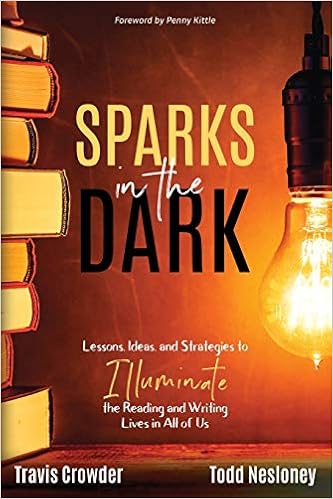
I’ll tell you what’s going on. I stinking read the rest of Sparks in the Dark this evening and I am so pumped up by Todd Nesloney and Travis Crowder! (Travis apparently is another hometown hero – had no idea he lived in NC until the end of the book; did I miss that somewhere? Home field advantage – I’ve got to come see you, Travis!)

I thoroughly enjoyed the first 7 chapters of this book and it was mostly about reading and integrating that into every content area and why reading is so important to our students. Well, then I read the last 6 chapters and I’ll be darned if I wasn’t inspired by their words on writing and now I’ve got to reflect and write an implementation plan for that.

Yes, you heard that right… This book is so doggone good that I’ve got to write two posts, reflecting and connecting to the text, then create another implementation plan – just based on (as Travis and Todd say) “illuminating the writing lives” in my students! Well-done, fellas; well-done!

As a child (I couldn’t have been more than 9 or 10) I sat at my old Windows computer (which required DOS prompts) and wrote chapters about realistic fiction. They were typically a knock-off of adventures in The Babysitter’s Club series by Ann Martin.

I kept a diary that I wrote in every night from the time I was in 1st or 2nd grade and distinctly remember writing a heartfelt post about the day my mom and dad officially split up and my dad walked out the door, when I was in 5th grade.

In 4th grade (Mrs. Byrd’s class), I wrote a lengthy answer to an essay question about changes in transportation in North Carolina on a social studies test. It is the first time I recall writing and enjoying writing at school. She was so impressed with the answer that it became an exemplar, which blew me away.

In 7th grade, we were required to write in a journal each week. Fridays were days for writing and we chose from 101 writing prompts and just wrote whatever we desired. Mine started out focused on the boy I had a [not-so-] secret crush on at the time. (I was 12, give me a break!) They evolved into more thought-provoking pieces of current events, as well as imaginative writing.

From there, school killed my love of writing. It became a chore.

When my ex-fiance and I broke off our engagement, I picked up writing again. I shared my “deepest, darkest secrets” in my journal (because calling it a diary felt so juvenile). I wrote my feelings, my apprehension about this new future, completely separated from the future I had imagined for years. When I met my husband for the first time, I wrote about him the night I got home. I wrote about the feeling that “this might be the one.” (Yes, I knew from the moment I met him, as did he… we were engaged in 6 weeks, married within the year, and through good, bad, and sometimes incredibly ugly we’re celebrating 12 years in December.)

Then social media kicked in. I found facebook (oddly enough) to be an outlet. It wasn’t as “deep-dark secret” as my journal had been, but it was a place to chronicle my life’s events. I would share my love for my job, day-to-day events, and yes, even what I ate at night (especially if it was Outback Steakhouse, one of my very favorites). I wrote about heartbreaks and shared with my family and closest friends – when we miscarried babies in not one… not two… but three different pregnancies, when I lost my Nanny (one of my biggest cheerleaders), and when my husband lost his job months after our youngest daughter was born.

Now… it’s blogging. This is my space. (See what I did there… y’all remember that? Whew – blast from the past!) It’s where I share my thoughts. Don Murray was so right when he says (as quoted in Sparks in the Dark), “You write to discover what you want to say.”

So my implementation plan is completely different from anything I’ve done to this point. I’m telling y’all… this book has grabbed my soul! It’s stirred something deep down. It’s awoken a passion that I didn’t realize I had; something completely different from what the math teacher in me would have ever admitted to having a passion for. Writing. It’s not about writing to a prompt. It’s not about answering the question of the day, or answering an essay question on a test. Like reading, it’s about choice. Choosing what you want to write about. It’s about getting your thoughts on paper (or screen, pick your poison). It’s about reflection. My best reflections have come through writing. Not verbal conversation with others. But through my own quiet time, after my family is asleep… when I sit in the middle section of our sectional wrapped up in a blanket with my heavily-stickered MacBook Pro in my lap. When I write. That’s when I discover what I want to say. Sometimes there are (what feels like) a bazillion typos. You may notice them. I do, too. I will eventually edit. But right now, it’s all so raw. I just want to get it out.

This implementation plan isn’t for me. It’s not even really for my students. It’s for you.

I challenge you to write. I challenge you to share your writing with others. Maybe it’s a journal (I don’t recommend sharing your deepest-darkest secrets with just anyone though… just sayin’). Maybe it’s a Google Doc. Maybe it’s a writing notebook. Maybe… just maybe it’s a blog. Whatever it is, write. Write to figure out what you believe. Figure out your passions. Figure out who you are. I’m 33 years old, and I am just discovering who Alicia Ray really is. Sometimes, she scares the crap out of me. Sometimes, I feel like she’s not enough. Sometimes, I love her. But she’s always me. And the best way to share her, this voice inside my head, is through writing. So, to you… go right now… Write. I’d love it if you’d give me a peek into your head. Please tag me when you share your post (if that’s the route you take)!

Go. Write. Now.

*Also, pick up a copy of Sparks in the Dark by Travis Crowder and Todd Nesloney. It will truly illuminate your own spark!

#DBC50Summer 48/50: Sparks in the Dark

I’ve not finished the book. I had to stop reading. So many ideas were swirling in my head that I couldn’t continue without getting part of these thoughts written down. I promise I’ll finish it. Surely, if you’ve been with me since the beginning of #DBC50Summer, you trust that I will uphold the integrity of #DBC50Summer by reading every word of every book. I will finish book 48. But it won’t be tonight. I can’t.

I have decided that Todd Nesloney is my spirit animal. Seriously – the parallels in our educational walk are insane… right up to where he becomes an administrator. I’m going to let you keep that one for both of us, okay, Todd? In previous blogs, I mentioned my journey in education. I was hired after three interviews with the same administrator (two face-to-face and one over the phone) as a fifth grade math teacher on a three-teacher team. I taught math to three sets of 20-22 fifth grade students. I had one small 20-25 minute block of SSR time (self-selected reading or silent sustained reading – pick an acronym meaning) and rarely conferenced with students. Why? Teaching reading was the job of our ELA teacher. Not. My. Job. (I, too, Todd, was wrong.) I used that time to grade papers, conference about Accelerated Math or Superstars Math, or troubleshoot the problems our Accelerated Reader program was having (ugh). It was the most dreaded part of my day, and I didn’t mind letting students know that I hated it. How arrogant I was! Then I transitioned to become a math and science teacher on two-teacher team. After two years of that, I was self-contained, teaching all subject areas in fifth grade. Only then, did I view myself as a reading teacher. How I wish I could go back and change my mindset then!

When former students hear that I work in a media center, I usually receive one of two reactions. A sideways glance and “oh really?” or a flat out “No WAY! I never imagined you in a library!” That’s how bad my disdain for teaching reading was coming across to students. I realize the impossibility of my next statement, but boy do I wish I had Sparks in the Dark by Travis Crowder and Todd Nesloney (coauthor of Kids Deserve It and author of Stories from Webb) when I was in the classroom!

This beautiful book eloquently states all that is right with reading and writing in the classroom! Every classroom, not just ELA, should be reading and writing daily! With intentionality. When I taught math and when I taught math and science, I should have been incorporating reading and writing. In a math methods class in college, I took a course that required writing every step to a problem in a problem set in paragraph form. We were to explain our chosen problem like we were explaining complex math to a kindergarten student. It was our responsibility to read the responses of our teammates, because we then presented their responses to the class. We wrote, read, and talked… in math. Never once did we draw diagrams unless we could specifically describe those diagrams in paragraph form. It was the hardest class I took in my undergrad coursework, but also the most meaningful. (I never used the information while teaching math, but I should have. Looking back, I realize that I did my students a huge disservice.)

I’m only on chapter 8, but I had to stop and share my takeaways thus far.

Takeaway 1: These fellas have passion for reading and writing in the classroom. Travis and Todd share their own failures, not only with us as readers, but with their students through written word. I had never considered writing for my students. I should definitely try that and see what happens! I did share the #DBC50Summer Explained post with them during media as an introduction to goal setting and reading as a choice. After they read the post, I asked them who the author was. Most had no idea. When I pointed out the URL was from aliciaray.com, several requested time to reread the article (or let’s be real, read it for the first time because they were now invested). Several immediately bookmarked my blog which blew my mind that they would be interested in these posts. I even shared that it was all “teacher-y stuff” but they didn’t seem to mind bookmarking anyway. (If any of you are reading this, hi and I love you! Do you have a book near you?)

Takeaway 2: Students deserve and crave choice and voice in their reading and writing. I have had a revelation in the past 5 years in the media center… I despise reading quizzes and book reports. I hate what it does to students’ love of reading. I’ve watched my own child devour a book and after watching her eyes light up as she tells me about it, I ask her if she’s doing to take a test on it the next day. It’s like flipping a switch. The light goes out. She’s no longer excited about the book. When did we get to that point as educators? Can’t they just read to enjoy reading? When did the enjoyment of reading a book become superseded by a need to reward students with arbitrary kids’ meal prizes or reward trips that parents still have to pay for after their child earned it (many times at the last moment due to peer pressure)? Traditional book reports do the same thing. Having authentic conversations about what a child is reading, giving them the opportunity to discuss their books with their peers… that will create a love of reading. Travis and Todd agree!

Takeaway 3: The quotes… oh the quotes from this book. Whether it’s the quotes from the likes of Penny Kittle, T.S. Eliot, John Maxwell, Virginia Woolf, Maya Angelou, etc at the beginning of each chapter, or the quotes interspersed within the chapter, this baby is full of amazing quotes! Here are some of my favorites:

  • “My reading scores were improving… [but] none of my students were leaving my classroom with a love of reading and writing. Change was necessary.”
  • “Change isn’t meant to be easy. If it were, everyone would love and seek out change.”
  • “When students see your genuine passion and interest, it will pique theirs.”
  • “Reading is part of a well-rounded life.”
  • “I find it exciting to work with children who claim to hate reading because much of the time the problem is they simply haven’t found a book that grips their heart or reaches their soul.”
  • “Providing time for children to read in every classroom shows the students just how important reading is and that, yes, your math teacher reads, too.”
  • “Our children are seeking to be understood while simultaneously seeking to understand. They have questions about current events and the choices that people make…we need to provide a safe space for them to discuss their fears, their worries, their uncertainties.”
  • “Arm us with books. Because the pen is mightier than the sword.”

See… powerful stuff, right? That’s not even close to all I’ve highlighted and written notes beside! What power reading and writing have for our students, and for us! If I’ve learned nothing else from #DBC50Summer, it is that truth. Reading and writing has proven to be an insanely powerful practice, and one that I will continue to pursue now that I’ve found my voice again. I will move from professional development books to middle school books and some young adult and picture books and continue this practice of reading and blogging. I believe it’s important for me to practice what I preach, so I want my students to be able to reference my publishing the blogs to a public audience as a positive example of digital footprint, citizenship, goal-setting, and writing for a purpose.

I have so many ideas of implementation plans swirling that I cannot possibly pick one right now…. and I’ve not even finished the book yet. I just had to stop and reflect! I can, however, share some of the possibilities with you.

  • Little Free Library – Our carpentry class made these for each elementary school three or four years ago and we supplied the LFL with discard books and Scholastic dollar books. I’d love to lead the initiative to create one for each of our middle and high schools this year.
  • Implementing a time in the media center to reflect on books as they return them. What did they like or not like? Should we keep the book in the media center or not? We are just recreating a reading culture at my school and many of the books (especially fiction) are not checked out very much. I have analyzed our collection over and over again, but this time, I will do it with the most important voices – the students’. They will help me decide which books to discard and which books we need to add to our collection through book suggestions.
  • We are doing a book tasting as part of a much larger Project-Based Learning experience next month. Stay tuned for a blog post with epic pictures and step-by-step directions for implementing at your school if you choose to do so.
  • For the first time ever, our students are given full freedom in book selection in the media center. In the past (in elementary school), every book was leveled and students could only check out books on their level. When students arrived at middle school, I do not level books, but I did require that students choose one fiction and one nonfiction book for a total of two books checked out at a time. I’m releasing control (whew – scary, but it’s the right thing for students, so I’m doing it) and allowing students to check out any three books they’d like. Of course, I’m encouraging them to read a variety of texts and to step out of their comfort zone in genres to try something new, but the ultimate decision is theirs.
  • Students are setting their own reading goals this year. Each quarter they are committing to reading “x” number of books before the end of the quarter. We discussed length of books being a factor, reading speed, genre, etc and that every book counted equally. So whether they read a picture book or Divergent, it counts as one book. Because there is no competition between students, only trying to reach your own goal, students were encouraged to create a realistic goal for themselves and share it with me. They then created a flipgrid video that shared their goal and their plan for reaching the goal using the following sentence frame: My name is __(tell your name)__ and my reading goal is to read ___(tell how many books)___ books by October 31. I will reach my goal by ___(share your plan)___. Finally, we will revisit these goals halfway through the quarter, evaluating our progress and at the end of the quarter will share on flipgrid whether they reached the goal and what their next quarter’s goal will be.

There is no reward for reaching their goal other than the satisfaction of reaching their goal and reading tremendous books. There is no consequence for not reaching their goal; we will just make plans for how to reach the goal next time. Finally, there is no quiz, project, report, etc to prove they have read or not read.

Crazy, right? But we’re trying it. Giving them complete ownership will hopefully create a desire to read like never before. Check back in early November for an update on how it’s going. Students had approximately 6 weeks left in the quarter when they created their goal. I am impressed that only 9% of students committed to only reading one book (zero wasn’t an option – they are expected to read something) in six weeks, while 50% of students created a goal of reading 3-8 books in this same time period. That’s an average of a book per week. If my students reach that goal, I will be super pumped! Reading a book per week is a HUGE upgrade from where we are now!

I’m excited to work alongside my administration and teachers to promote a love of reading, writing, and learning in our school. This book is exactly what we need as we partner with our students to create a literacy plan that empowers students to make their own goals and lead the way with reading and writing. It’s going to be awesome! I look forward to finishing the book tomorrow before starting book 49!

In the meantime, go get a copy of Sparks in the Dark and get inspired to implement great changes in your school in regards to reading and writing with purpose and excitement. Be sure to follow Travis and Todd on Twitter at @teachermantrav and @techninjatodd, respectively. Follow the hashtag #SparksintheDark for awesome conversation and ideas to integrate reading and writing into every content area. Check out Todd’s website here and Travis’s website here for more resources, including blogs! The podcast below from Vicki (@coolcatteacher) Davis is an amazing look into the book and the hearts of these two astounding educators! *I highly recommend 10-Minute Teacher Podcast – always! Great resources, conversation, and doesn’t take up a lot of your time. Win-Win-Win!*

Finally, hop over to the flipgrid and share your own story of a time when you saw sparks in the dark! This may be how you create a lifelong love of reading and writing in your school, classroom, or district. It may be a story about a student who finally “got it” and fell in love with literacy because of “that book”. Share with us! Andrea Paulakovich (creator of this amazing flipgrid space and the idea of global collaboration on all DBC, Inc book on flipgrid) and I would love for you to add your thoughts to the flipgrid!

Speaking of book 49 (which I will begin ONLY after I finish the last few chapters of Sparks in the Dark – remember, we’ve established that trust now, yes?)… Sean – it’s time! It’s FINALLY time! I have the best story about my friend Sean, and how we met and mutually connected to Dave Burgess in 2015! I cannot wait to share that story with you when I finally get to read, connect, reflect, and create an implementation plan for his book that released this summer! I’ve been waiting for this moment all summer, Sean! Book 49 is called The Pepper Effect and is written by my friend (and “neighbor”), Sean Gaillard!