#DBC50Summer 12/50: How Much Water Do We Have?

Up to this point, all 11 books I have read as part of #DBC50Summer have been based on educational theory, practices, and/or pedagogy.  All of them have inspired/motivated me in some way, taught me something new, and/or repurposed something I already did.

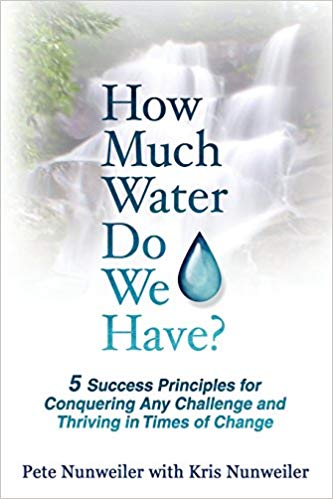
Book 12 is very different from the traditional Dave Burgess Consulting, Inc book.  The book is still very conversational, and I still received a great deal of information while reading.  This book is not an “educational” book in the sense of professional development.  In my opinion, How Much Water Do We Have? by Pete Nunweiler with contributions from his wife, Kris Nunweiler is a personal development book with themes that apply in every facet of life, including education.
howmuchwater

Throughout this very short book (only 85 pages), Pete shares 5 principles that will help us figure out the answer to success.  The first 1/3 of the book is a narration of a spontaneous trip to Ramsay Cascade that Pete and his wife, Kris, took together while on an anniversary trip.  Then, Pete shares his 5 principles of creating success (one principle per chapter) and relates it back to the story of the 8 mile roundtrip hike to the waterfall, as well as in the real world.

Even though this book is not your “typical” DBC book, it is still full of great information and is very well-written.  The title of the book was so confusing to me, but once I read the first bit of the introduction, I could see the metaphor that Pete was trying to accomplish.  He explicitly states the metaphor later in the book, as written below.

“Water is a metaphor for all the things that an individual or an organization needs when faced with some type of change or new initiative…Just like water is essential for your physical wellness, information, planning, motivation, support, and leadership are required to ensure that any initiative is successful.” ~Pete Nunweiler

The 5 Waters, as Pete describes them, are

  • Information – Ask the right questions. Get accurate answers from the best sources.  Share that information with the right people at the right time. (Who, What, Where, When, and Why – Ask WHY repeatedly! Know your why!)
  • Planning –  If you fail to plan, plan to fail. (Who, What, Where, When, and Why to create the plan, and HOW to formulate the plan)
  • Motivation – We all do things for our own reasons.  Find out the right reasons for those you lead.  There are no “bad reasons”, but there are “wrong reasons”.  Motivation drives our actions.
  • Support – Encourage others and develop an understanding of how others feel.  Everyone is responsible for recognizing and offering support!
  • Leadership – Are you a manager or a leader?

There were multiple tweet-able quotes within these pages, and after reading each one, I would prepare to tweet it, then stop every time!  Why?  No one would have understood it without the metaphor and the nearly 30 page story of the trip to the waterfall.  So while several quotes were impactful to me, such as “bring a pair of dry socks”, it may not mean anything to the Twitter-verse without reading this book.

The biggest takeaway I got from this book comes from the Leadership section.  Within this chapter, Pete talks about the difference between being a manager and being a leader.  He discusses that “leaders don’t always hold titles and those with titles aren’t always leaders.”  That’s a “preach it” moment if I’ve ever heard one.  Even though the book isn’t “educational,” this idea applies to all avenues of life.  I have worked FOR principals and I have worked WITH principals.  It is a substantial difference in culture with just the change of one word.  Pete gives us two questions to consider… “Who do you receive direction from?” and “Who makes you truly want to come to work every day?”  The answer to the first typically has a title, but the answer for the second is the real leader.  For me… the real leaders are my students.  Let that sink in for a minute. That’s some deep stuff to get from a “non-educational” book, right?

Pete says the following things about leaders and leadership.  Pete’s words are perfect as is, so no paraphrasing here. Not Today! (You just said that in Michelle Dobyne’s voice, didn’t you? HAHA)

“Having a title is not leadership.  Managing or supervising are not the same as leaders, not does providing direction equate to leadership.”

“Leadership is a character trait, which is why the greatest strategy an organization can implement is to promote proven leaders into titled positions…When people with positive leadership characteristics are given positional roles, they can accomplish great things.”

“Businesses are managed; people are led.”

Finally, when I wear the hat of instructional coach, I frequently hear teachers say, “But I’m just a teacher. I’m not a leader; I’m not the principal. I can’t <insert thing here>.” This comes up when we discuss shifting the school culture, mentoring other teachers, sharing at staff meetings or district level workshops, etc.  Do you really want to know who your leaders are?  If you’re actually a leader?  Pete gives us four questions to identify who the leaders are in an organization.

Who do others go to… for information? To hear a plan? For a voice of reason to help them through the day? When they need support?

Identify who these people are in your school.  Those. Are. Your. Leaders.  Is it you?  It very likely is!  You are a teacher leader.  You’re not “just” a teacher! Give yourself credit for being the leader that you are!

So my intentional action from the 12th book…figure out how much water we have. When a new initiative is coming, it has a higher likelihood of success if the entire staff has these five basic principles covered.  Without even one of these 5 Waters, the initiative could quickly fail.  Make sure everyone has enough water!

As this isn’t really an “educational” book, there isn’t quite the Twitter community surrounding this book.  You can find older tweets through the hashtag #5Waters.  Pete has published two other books, and you can find his website here.  His photography is stunning and can be seen here.  As always, the Flipgrid is open for responses with password DBCSummer.  Because the book is a bit different, the prompt is a bit different.  Check it out and respond!  I think you’ll find it helpful! (Thank you, Andrea, for the incredible idea of a global book study and the think tank that utilizing Flipgrid provides us! Go follow her #DBC50Summer journey, too!)

This short read was exactly what I needed at this point in #DBC50Summer.  It’s funny because as you read, Pete asks you to identify a current challenge you are working through, that you want to be successful in implementing.  The entire time I read, my challenge was completing this challenge.  So now, I’m ready to push forward and hop into Lucky #13!!!!  Are you ready to Play Like A Pirate?!  I read this book a couple years ago, and cannot wait to reread it and share with you! GI Joe, Barbie, Trading Cards, and Lego bricks are coming your way very soon!

 

#DBC50Summer 11/50: Your School Rocks

I was told several years ago, “If you don’t tell your story, someone else will.”  This has resonated with me since then.  If there is nothing else you get from this post, remember that one thing.  It is so important for us to tell the real story about what’s going on in education, specifically public education.  In North Carolina (and around the country), public education is under attack, and it is our job to fight back with positive stories about all of the awesome that happens in our buildings every single day.

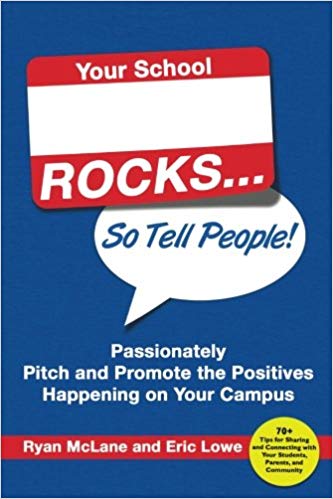
Book 11 in the Dave Burgess Consulting, Inc line up tells you exactly how to go about telling that story!  Your School Rocks by Ryan McLane and Eric Lowe shares stories of two principals in Ohio and how they use social media to tell their school story, thus building culture within the building and rapport with the community.

yourschoolrocks

This book was released at a time when schools were just beginning to tap into the power of social media.  My district office had just required Facebook pages of each school in our system about 6 months before this book was published.  I remember going to my principal when I started my first position in a media center and begging to start a Facebook page for our school.  At the time, there was so much red tape around it that we ultimately decided to wait.  By the time summer rolled around (about 6 months after I began that position), it was deemed a requirement.  And kudos to our central office, Superintendent, and Board of Education for seeing that this would positively impact our school system.  When school started back, I became the Facebook & Twitter administrator for our school, as well as the Public Information Officer (PIO) in which I wrote articles for our local newspaper and invited the press to big events in our school.

Here’s a few somethings I found out while doing those three roles:

  1. I needed to relax. I was so worried that a negative post would come up and I wouldn’t be able to respond before the firestorm happened that I checked our Facebook and Twitter pages every 30 minutes or so.  It was the last thing I checked before bed and the first thing I checked in the morning.  However, no negative posts ever came. Ever.  As Ryan & Eric say, “Since we kept our posts positive, parents tend to be positive as well.”  This was 100% truth in my experience.
  2. Know your DNR students.  As you know, a DNR typically refers to “Do Not Resuscitate” which gets people’s attention really fast!  However, for us, it meant “Do Not Release”.  Like Ryan and Eric, we respected the wishes of any parent/guardian who did not want their child’s photo or name released on social media.  It was incredibly important that the child’s teacher, special area teachers, principal, assistant principal, and myself knew to keep that student out of the frame when taking pictures!  So, our version of a DNR got our attention really quickly, too! If you are the one posting photos to the school’s social media accounts, you must be DILIGENT about checking, double checking, and triple checking that these students are not posted.  We only had 6 when I was at that school, so it was easy to remember their faces and names.
  3. Parents REALLY respond to social media.  I was constantly blown away by the responses we would get on social media and how immediate those responses would be!  For example, I would record short videos of students practicing for their Parent-Teacher Association (PTA) performance and parents would oooh and aaah over the videos, liking, sharing, and commenting within minutes of the post being published!  More families typically attended those PTA performances where I would post those short videos of them practicing because they could see the hard work their child put in to perfecting the songs. Parents would ask questions about schedule changes and awards information on Facebook as well, and we would post a weekly update in a visual format every Sunday with key information for the week.
  4. Notice that I refer to Facebook and not Twitter.  Our parents were not really on Twitter at the time.  The space they frequented was Facebook, so that’s where I spent the majority of my time sharing school information.  To make sure that our Twitter was not inactive, I linked the Twitter account to the Facebook account.  Every time I would post on Facebook, Twitter would automatically generate a post for me and update on Twitter with a link to the Facebook post.  It wasn’t perfect, but it worked and saved me a ton of time!  I would suggest linking accounts when possible.  Instagram has taken off in popularity so much that, like Ryan and Eric mention, I would ask students where they (and their parents) hang out on social media.  I would imagine more students are on Instagram now than Facebook, to be honest; parents are likely still using Facebook!
  5. Once I started using the school’s social media outlets, there was no longer a need to write newspaper articles or beg the press to come to an event.  Parents would get more information from social media than they would have from the newspaper anyway.  If I was sharing information about an exciting event coming up, the press would contact us, and be more likely to show up on their own and write the article themselves (win-win).

In my current position, I am not in charge of our school’s social media, but I still post pictures on my personal Twitter account frequently!  I make sure to take into consideration students that cannot be photographed and respect the wishes of that family.  I tag our school’s Twitter account and use the district hashtag to promote the images beyond our school.  It also makes the Twitter administrator’s job a bit easier because they only have to retweet from the school’s official Twitter account!

Ryan and Eric reference several times using social media on an eighth grade Washington, DC trip and how a hashtag allowed parents to follow along with their children while they were on the trip.  I used my personal account, and encouraged the other chaperones to use theirs, to tweet pictures about our eighth grade trip to Williamsburg, VA.  Students jumped on board and we had the BEST time tweeting!  I had students let their parents know to follow the hashtag and it really eased many of the parental concerns about sending their child off for their first overnight school trip.  You can still see the posts by searching for #mmms8thgradetrip on Twitter.  I love the idea of pulling together all of the images for a Flipboard or another aggregation tool as suggested in the book!

Currently in my district, we are not allowed to “friend” or “follow” students on social media.  This can make using a hashtag a “gray” area, as this puts interactions in a public forum outside of school and searchable by anyone, but is not sanctioned by the school.  (Note: I have seen many elementary schools create Twitter walls in their classroom where students can write on a sentence strip what they would tweet on social media.  I thought that was a clever way to still encourage connection and collaboration, as well as cyber safety and digital footprint, while still maintaining social media rules for students under the age of 13.)  I need to further investigate the policies for my district in relation to hashtags and interactions outside of friend/follow requests.  In fact, our policy likely needs to be updated to be more clear about social media as the prominence and proliferation of social media has become more and more evident.  My favorite quote from the book stems from this idea, and I am sharing with our new Director of Communications in the coming weeks.

Many educators…are hesitant abut implementing the use of social media because of the potentially negative “what ifs?”  Again, we encourage you also to consider all of the potentially positive “what ifs?” ~Ryan McLane and Eric Lowe

I am taking away multiple ideas from this book, like creating a video newsletter for the media center, encouraging positive character through the use of a daily quote, and having students and other educators write blog posts!

However, I think the one big idea I want to prioritize implementing this school year is working with my administrators to create a hashtag for our school that markets our mission and vision for all of our stakeholders.  This way students can share their thoughts on any platform using the hashtag and they can own the positive promotion of our school.  We are the Mustangs and we are a STEM magnet middle school, so if you can help us think of a creative, short hashtag, please share with me in the comments or on Twitter!

I really enjoyed reading Your School Rocks, and highly suggest purchasing the book, especially if you are not already employing the benefits of using social media and videos in your school or classroom.  I want to stress again, check your district policy!!!  Use the book to reference as you fight the battle, if need be.  However, this is NOT one of those things I would suggest asking for forgiveness later.  In this case, it’s best to ask permission, even if you’re just “test driving” social media tools!

Andrea Paulakovich (who I must give all credit for this incredibly genius idea) and I would love for you to share your thoughts of Your School Rocks on our Flipgrid!  It is our goal that this space will become a global book study of ALL Dave Burgess Consulting books!  So feel free to add your voice.  If no one has posted yet, be a trendsetter!  You may use the prompts for ideas if you’d like, but don’t feel obligated!  Just share your thoughts!  The password is always DBCSummer!

For more information, check out the website at YourSchoolRocks.com – several of the videos referenced in the book are housed there, as well as links to Ryan and Eric’s Google+ streams.  You may also follow along with the community on Twitter using the hashtag #YourSchoolRocks!

Lastly, another exciting takeaway I had while reading was Teach Like A Pirate Day!  Read more about this in the book, but just imagine this for a minute… kids come to school, report to their homeroom for attendance, and then get to CHOOSE which classes they attend for the entire day!  Their choices are outlined in course description guide the day before – would students come to your class?  As a teacher, I would LOVE this day because I would get to teach that lesson I’ve always wanted to teach but felt like I couldn’t because it may not be “on the test” and I know students are excited to come to my class because they CHOSE to be there.  I immediately tweeted a #BookSnap and asked my principal if we could work this out as an enrichment day (days that are already built into our schedule).

The 12th book is another shorter book, with only 85 pages! How Much Water Do We Have? appears to be unlike any other DBC book.  Maybe it’s a risk that DBC took?  I’m not sure!  I’m very much looking forward to “diving in” (see what I did there; it’s been a while since I got to do a SWIDT moment).  I was completely unaware of this book, so it should be exciting to see what happens in book 12!  Stay Tuned!


#DBC50Summer Book 1-10 Recap

Screen Shot 2018-07-07 at 3.54.07 AM

So I did a thing.  In less than 4 weeks, I have read the first 10 books from Dave Burgess Consulting, Inc.  I started this little journey in the middle of June when the 50th book was released.  There was a big Twitter hype using #DBC50.  There was a bit of what Dave calls Creative Alchemy going on.  I had a massive amount of the DBC books on a shelf, many of which I had never read due to time constraints.  Something else always came up and those books stayed on the shelf.  I knew I wanted to start blogging again.  I enjoy writing, but hadn’t been inspired to write anything in a long time.  I also wanted to be more involved on Twitter.  I take so many amazing ideas from Twitter and wasn’t giving a lot back, especially with school dismissed for the summer.  I wanted to give back and strengthen my Professional/Personal Learning Network (PLN).  Upon seeing #DBC50, I thought to myself, “Self, do it now. Read them all.”  So before I could chicken out, I mentioned it to Dave, found out the book release order, and blogged it. Boom – accountability.

What I never expected was the huge response I’ve gotten from the Twitter community, Dave & Shelley Burgess, Wendy & Tara of DBC, Inc, and the authors of DBC, Inc!  I have felt so much support and encouragement on this wild little ride I’m on this summer.

A cynic could say, “Of course they are being supportive, Alicia – they’re getting advertisement.”  (I’ve actually had people say that, or something similar, as I share the kindness each of the authors has shown thus far.)  I’ve definitely been picked on for doing this – told that I need to dial it back a notch. UGH – naysayers.  Here’s the thing though… they DESERVE the “free advertisement” and my students deserve a teacher wiling to do something “radical” like read 50 books with cohesion throughout all fifty, then think of ways to implement what I’ve learned to make their experience amazing!  These authors worked their tails off writing each book, poured their heart and soul into it; Dave and Shelley took the time to vet them and put the Pirate seal of approval on them, painstakingly made sure that there was no contradiction and that the message flows throughout the books.  DBC is amplifying the impact of INCREDIBLE educators beyond their own students and districts… so yeah, I’m happy as can be to share their books with my small part of the world!  I can assure that I have gotten much, much more out of this experience than they will by my sharing my ramblings on #DBC50Summer. Sure, DBC is getting advertising for every. single. book. Sure, the authors are getting shout-outs on Twitter – some of them with books that were published 3-4 years ago.  It’s not like I’m bashing their books – however I have been, and will continue to be, VERY honest.  Some of the books, I’ve not really wanted to read.  This is part of why I wanted to be methodical in how I went about reading the #DBC50.  If I read the ones I enjoyed first, I would likely quit before I finished all 50.  As it stands now, number 49’s author and I met several years ago and he’s a local guy.  I adore him and cannot wait to read his book!  I’ve been focused for the past year on taking care of my health and have lost 40 pounds; I am beyond excited to read number 50, which is about building a stronger mind and body.  I had already read number 45 and 46 before #DBC50Summer even started, but won’t publish those blogs until I get to them in the #DBC50 – those authors haven’t seen the blogs I’ve written either.

Several people have joined me in the quest to read and blog about DBC books!  You’re more than welcome to join, too!  For me, it’s a 50 book challenge.  For you, it doesn’t have to be!  It can be just ONE book – because that ONE book is ONE more book of inspiration and ideas that you can implement next year! When you read and blog about DBC books, share with me by using the hashtag #DBC50Summer!  I’d love to read YOUR reflections and how you plan to implement what you learned!  Also – if you aren’t the blogging type (or even if you are), join the Flipgrid discussions on each of the books!  There is a link to Flipgrid in each blog post!  The password for each of them is DBCSummer (case sensitive).  The idea is that while many of us are doing book studies in pockets, which is fantastic, why not ALSO come together as one HUGE global book study of ANY DBC book out there! Imagine the think tank this space could become!  Don’t be shy – share your reflections, your takeaways!  The questions prompts are just suggestions – we just want to hear your voice and share in the learning with you!  If you don’t see your favorite DBC book yet, hold your horses.  It’ll be here soon enough!  The Flipgrid was the brainchild of my new #tlapsister friend, Andrea Paulakovich!  She is an incredible educator from Kansas who approached me about joining the fun when I first blogged about #DBC50Summer!  This girl has a heart of gold and a story that needs to be told! I adore her and am so thankful that #DBC50Summer brought us together, although I feel like we would’ve found one another anyway eventually! We were just meant to be friends!  Be sure to follow along on her journey as well!  Her blog is stunningly beautiful!

Finally, there will be sketch notes added to the blogs from my dear friend, Holly King!  The beautiful artwork in sketch notes takes time, so they will be added as updates and posted as they come in!  If anyone else would like to add their sketch notes, let me know!  I can create a Google Drive folder, with you having full credit for your sketchnote of course, and add the link to the blogs as well! OR you can share your sketch note and use the hashtag #DBC50Summer – woo hoo!!!  I love the collaboration and BOY has my PLN grown in the past month.

So let’s take just a second and recap what we’ve had so far.

1 – Teach Like A Pirate by Dave Burgess: inspiration, inspiration, inspiration. I couldn’t tell you how many times I’ve read it and it still makes my heart race.  Even more so now that I’ve met Dave twice and been able to actually hear the passion, energy, and enthusiasm behind his written word.

2 – Pure Genius by Don Wettrick: how he put Genius Hour/20 Time on steroids and created an Innovation class in which students are actually running their own businesses in some cases

3 – P is for Pirate by Dave & Shelley Burgess: a picture book for educators to inspire them with every letter of the alphabet

4 – Learn Like A Pirate by Paul Solarz: student empowerment through a truly student-led classroom

5 – DITCH That Textbook by Matt Miller: how will you get messy and “punch fear in the face” to make your lessons Different Innovative Tech-laden Creative and Hands-On

6 – 50 Things You Can Do With Google Classroom by Alice Keeler & Libbi Miller: a handbook of sorts that takes you from beginner to pretty dang advanced in the use of Google Classroom (Bonus that the lessons learned go hand in hand with DITCH That Textbook!)

7 – Master the Media by Julie Smith: a guide for educators *and parents* sharing how media literacy can, quite literally, save the world – this is needed more and more with the digitally rich environment and constant stream of media that our world now takes in every single day without batting an eye

8 – The Zen Teacher by Dan Tricarico: I was such a naysayer and this book has proven to be insanely valuable to me! It made me stop and re-evaluate if I was really taking care of myself.  I can’t do right by any students if I’m not taking care of myself!

9 – The Innovator’s Mindset by George Couros: The most viewed post to date with over 300 views in 24 hours. This blog barely had 300 total views in 3 years. A cry to eradicate the buzzword pandemic that “innovation” has become.  How can we truly be innovative? Make it new and better!

10 – Explore Like A Pirate by Michael Matera: This book brings the element of fun back into classrooms through gamification.  I want to be a student in his class – it sounds like he makes learning come alive through allowing students to discover the learning rather than spoon-feeding!

Going “way back” in the YouTube archives (the end of 2015), Dave Burgess shares these 10 books with us in 8 minutes.

The most frequently asked question I’ve had since beginning this journey… what will you do with #DBC51, #DBC52, etc?

I will continue. I can’t stop at 50. Number 51 and 52 are already waiting on the shelf for their turn, and 53 is already on preorder.  I have learned so much from just the first ten that I can’t imagine missing out on the learning that future DBC books will bring! As long as DBC publishes, and I am physically able, I will be continuing.

I do have one problem though, and I need your help!  What do I call this adventure when I’m on book 51 and Summer is over?  It can’t continue to be #DBC50Summer… post your ideas in the comments or share with me on Twitter – I’m @iluveducating and follow the #DBC50Summer.

Now… on to the next ten. Having so much fun, and even if no one in the world reads another word, I’ve taken away ideas that will forever change my teaching practice.  To see a simplified spreadsheet of what I plan to implement, titles/authors, as well as the blog link and flipgrid link, click here.