#DBCBookBlogs: Make Learning Magical

Several years ago, there was a night of games at a conference. This was the first time I ever spoke to Tisha Richmond. Fast forward to last April and I knew I’d met a new best friend.

She was playing Code Names with her class! That is one of my (and my students’) favorite games to play!

I had no idea who this Tisha Richmond lady was, but I already adored her. Who can resist another tabletop gamer AND her Twitter handle sounded way cool – @tishrich.

So when I found out she was releasing a book with THE Dave Burgess Consulting, Inc I was so excited (as evidenced by the sheer number of exclamation points in the above tweet, ha)!

The day it was available on Amazon, it was purchased, and on Sept 18, it arrived!

Finally – I get to share my thoughts about Make Learning Magical by Tisha Richmond, book 57 (and the most recent release) in the amazing line of Dave Burgess Consulting, Inc books.

MLMagical

Stop right now and go get your copy. Seriously. This was one of those books that I didn’t want to put down. It is a book from which I had SO much I wanted to do that I had to wait and get my sleep on before I could make a decision about my implementation plan (Spoiler alert: I still couldn’t make a decision).

There are so many practical ideas within Tisha’s book and every single one seems feasible in any classroom. Tisha was a culinary arts teacher who has now transitioned to a new role as her district’s tech integration specialist. She shares how she gamified her classroom and how she gave her students an authentic audience. In her class it wasn’t just about spending time in the kitchen, it was also about spending time with one another and students putting their own spin on culinary creations.

Her acronym (because, hello… it is a DBC book after all… we know how much we love those acronyms) It’s magical… no, really… it’s MAGICAL.

  • Memorable Beginnings

  • Authenticity and Agency

  • Gamified Experiences

  • Innovation

  • Creativity, Collaboration, and Curiosity

  • Authentic Audience

  • Legacy

See… MAGICAL.

Memorable Beginnings

Tisha advocates for leaving the syllabus, handbook, rules and procedures until AFTER getting to know our students. I love this! After all, I teach kids. I need to know those kids and they need to know me before any true learning connections can happen. Learning certainly isn’t magical if students don’t feel comfortable in their own environment.

From this section, I choose to implement the decor. She speaks to using all senses to engage students. These include using music to engage the ears, aromas to engage the nose, visually pleasing colors with the psychology of colors to engage the eyes. As I seek to be more magical in my lessons, I will consider what students are seeing, smelling, and hearing.

Authenticity and Agency

This entire section – the whole thing – spoke to me at the core. Having an attitude of gratitude, giving students voice, and sharing our failures are keys to a magical environment. I am implementing the #GratitudeSnaps co-created by Tisha and Tara Martin (author of Be REAL) and sharing one thing I am thankful for each day for the next three weeks.

Gamified Experiences

If you loved Michael Matera‘s eXPlore Like a Pirate, you will certainly love this part of the book! In fact, Michael wrote the foreword for Make Learning Magical! I personally love the mini-games that Tisha shares.

Last spring I was awarded a local mini-grant to purchase tabletop games for use in the classroom. I am so pumped to be using these games in connection to curriculum across grade levels. The game club that I have the pleasure of facilitating is every Friday afternoon and we are enjoying spending time together. I will be implementing these games into classrooms and blogging about them as the implementation for this section (and the main implementation of this book).

*Think of the other implementations as “side quests“.

Innovation

Tisha reminds us of George Couros‘s The Innovator’s Mindset in which George explores the idea of innovating inside our boxes. This means to use what we have and innovate with that.

It is in this section that Tisha shares her biggest mic drop moment (in my opinion). This is where I feel like she’s come off of the book’s pages and is talking to me face-to-face in my living room, and I bet you’ll feel the same way!

“I’ve had moments of irrational fear and doubt when I’ve strongly considered going back to comfortable and easy; however, the fire inside me is too strong. I know that I can never go back to comfortable and easy, because in the discomfort and challenge is where I’ve experienced such growth. In the fear, I’ve discovered things about myself I hadn’t realized and become even more certain of what I believe and hold dear to my heart.”

~Tisha Richmond, Make Learning Magical

Here I am getting goosebumps again just reading that part of Tisha’s heart in word form. This reminds me so much of Shawn Mendes’s song “It Isn’t In My Blood.” We hear this  phrase repeated time and time again – it’s like an anthem.

Sometimes I feel like giving up
But I just can’t
It isn’t in my blood

Creativity, Collaboration, and Curiosity

So much is covered in this section that is pure gold! From considering the introvert to giving more opportunities for making in the classroom, from creating buzz for lessons (think Teach Like A Pirate hooks) to sketchnoting and being a connected educator, there is so much in this one short section. Tisha is really bringing the heat, so to speak.

My implementation (which scares the socks off of me) is to be more intentional in sketchnoting. Being a connected educator has given me opportunities to learn from Carrie Baughcum, Sylvia Duckworth, Julie Woodard, Monica Spillman, and more. If you’re not following these rockstars, I’d suggest taking a moment to rectify the situation before moving forward.

Authentic Audience

Giving students an authentic audience is so important. It is well known that students will do bare minimum in most cases when their teachers are the sole audience. They will put in a little more work when their peers become part of the audience. But when we allow students to publish their work to the world, it gets real… really real.

My implementation is to pull in more audiences for the students and teachers I serve.

Legacy

When is the last time you ran into one of your own former teachers? As an educator, did you take the time to speak with your former teacher and share their impact? I hope so. I was in JROTC throughout my entire high school career. For a reason I will never understand, my Sergeant saw leadership potential in me and within just days promoted me to Colorguard Commander. At the first home football game of my freshman year, I carried the American Flag onto the field flanked by two riflemen and the state colors. I was shaking like a leaf, but I did my job. We marched on the field, we presented the colors, we ordered the colors, and we marched back off in perfect unison. Until that moment, I’d never experienced leadership to that degree. He deeply impacted me through that quick decision to give me a promotion and declare that I would command cadets that were much more experienced than I was.

Be sure to thank your former teachers, if at all possible, who impacted you in a positive way. My first year students are now in their early to mid twenties. I am blessed to watch them get married, start families, and begin their careers through social media. The thought of leaving my own legacy in children is both terrifying and empowering. We should never take it lightly.

Tisha’s book is further proof that the DBC, Inc line of educational books is only getting stronger and stronger. Who would have ever thought that 6 years ago at the release of Teach Like A Pirate, some edgy book with a pirate map on the cover self-published from a kitchen table, would have the legacy that it is leaving on education around the globe. It’s powerful, and truly – it’s mind-blowing.

To follow along with Make Learning Magical conversations, follow Tisha Richmond and add the hashtag #MLMagical to your tweetdeck columns. Go spend some time on Tisha’s website and blog found here. You will also see a section for recipes along the top (or click here). <Tisha, I need lessons, ma’am! Just saying… I struggle with boiling water, no lie.> Tisha has also done podcasts and videos! Check out this one with Jeff Utecht of Shifting Our Schools, this one with StoriesInEdu, or this Recap of #MasteryChat! As if all of that isn’t enough, Make Learning Magical comes with its own slice of magic… Ann Brucker of BreakoutEDU created an epic #BreakoutEDU game to partner with the book! Whaaat? I know, right?! So awesome! I want to do a book study, just so I can set the game up for others to play! This is an incredible partnership and I really hope to see more of this in the future!

The flipgrid is available for you to reflect, share your own thoughts and implementations from Make Learning Magical! A special thank you to Andrea Paulakovich for allowing me to co-pilot this incredible global collaboration spaces for all of the DBC books!

The next book to be released is yet to be seen publicly…. ooooh, wait a minute… just double-checked Twitter to see this post…

Allyson Apsey (author of The Path to Serendipity has released the Amazon link to her first picture book (and the second children’s book in the DBC, Inc line) titled The Princes of Serendip! This book will begin shipping soon! Go grab a copy of Make Learning Magical AND The Princes of Serendip now! Book 58 is coming soon!
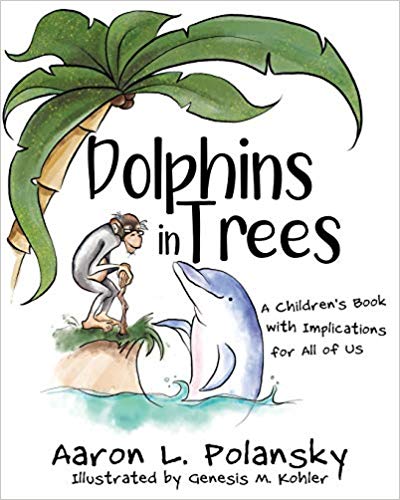

#DBCBookBlogs: Dolphins in Trees

Picture books aren’t just for young children. I enjoy using short stories and picture books to spark an idea, start an experience, and set the stage for incredible things to come. When I heard that Dave Burgess Consulting, Inc was releasing their first children’s book, I was elated!

In my opinion, Dolphins in Trees by Aaron Polansky was the perfect way to kick off this new endeavor for DBC. It is beautifully illustrated by THE Genesis Kohler – the same illustrator of P is for Pirate by Dave and Shelley Burgess. There is so much detail in every picture and the colors pop off the page.

My favorite picture books are those that transcend time. I love books like The Lorax by Dr. Seuss, Chrysanthemum by Kevin Henkes, and Rosie Revere, Engineer by Andrea Beaty. These are books I can use at any level, from PreK/Kindergarten to adult learners, these books have something for everyone. Aaron’s book falls in this category! As the subtitle says, it’s a “children’s book with implications for all of us”.

dolphins

I preordered this book and received a copy very quickly! I totally cracked open the packaging and read it immediately! Then I read it again. And again.

Then I read it to my daughters. They love Dizzy the Dolphin. And let’s be real, who can resist reading a book that rhymes? It’s a perfect read-aloud book! As a former elementary school media coordinator, my teacher mind immediately shifted into gear & started thinking of lesson ideas for this book! Below are just a few ideas! Use the flipgrid (copiloted by Andrea Paulakovich and me as a space for global collaboration on DBC, Inc books) to share your own ideas about how to integrate this book into a lesson with any age group!

  • Choose a character from the story and rewrite the story from their point-of-view.
  • Pretend you are one of the animals who did not help Mindful. What would you have done differently?
  • Tell about a time that you lost something. Did someone else help you find it? How did that make you feel?
  • Create a storyboard sequencing the events in the story.
  • Use Dolphins in Trees to kick off a week of Random Acts of Kindness.
  • Have a discussion about differences and how those make us unique.
  • Pretend you are a member of Mindful’s monkey family. Write a letter of thanks to Dizzy the Dolphin. Then write a letter to someone who has been helpful to you in real life.
  • Act out the story as a readers’ theatre.
  • The monkey’s name is Mindful; what does it mean to be mindful? Have a discussion sharing ways to maintain mindfulness in school.
  • Dizzy takes a risk by coming out of the water to help Mindful. What risks have you taken and what were the results? Did you fall from the tree, or did you use your echolocation to find what you were looking for?

As I was reading this one out of order during the #DBC50Summer, I knew I would need to think of a way to implement the book. The easiest, most obvious, implementation is to read this book with my middle school students during one of our media days and have a discussion about being mindful of others and helping, even when you think you have nothing to give. I had already been discussing with our 7th grade team a Kindness Challenge in which students would do Positive impACTs in their school, home, and community, snap photo evidence, reflect, and earn Positive impACT money to spend on books at a book tasting to take to their forever home. This book is the perfect way to kick off that event, right?!

However, if you’ve been with me for long, you may know that I rarely pick out the most obvious thing to implement. As I read the book for the bazillionth time (okay, maybe a slight exaggeration… but only slight), I noticed something I’d never paid attention to before. Mindful the Monkey is old. He needs help because he cannot do what he used to be able to do. I know, I know… that’s pretty clearly stated several times. But hear me out because this is close to my heart right now.

There is an enormous division between educators that breaks my heart. It is especially evident in my home state, thanks to politics. This division is not due to race, gender, religious beliefs, or sexuality. No… this is due to age.

When you think of a veteran teacher, what immediately comes to mind? What does their classroom look like? Now picture a beginning teacher. What do you see? What does their environment look like?

How different do those images appear to you? Typically when I do this activity at workshops, the veteran teacher is aged and stern looking. She is no-nonsense. She uses a dry erase board, worksheets, and textbooks to lead her students. She stands in front of the room of desks in rows and columns and lectures while students take notes. She refuses to change her methods. She counts down the days until retirement.

Flip to the beginning teacher. He is typically energetic, full of fresh ideas. He is bright-eyed and uses technology to engage his students. He groups students and facilitates discussion as he moves throughout the room. Students are empowered to lead their peers in discovery and there are smiles all around. He wakes up ready to change the world. If something doesn’t work in his classroom, he will try, try again! He has a growth mindset and inspires his students to take risks.

Pause.

That’s some messed up thinking right there! But aren’t those the stereotypes? Why do we equate veteran teachers to traditional teachers? Why do we assume they are unhappy? Why do we see worksheets and textbooks dancing in our heads?

Furthermore, why do we automatically assume that beginning teachers are using technology and are comfortable with taking risks? Why do we think beginning teachers have the capacity to grow and veteran teachers are stuck in their ways?

As an instructional coach, I’ve seen teachers who fit the stereotype to a “t” and teachers who shatter the stereotype into shards. I’m sure you can immediately think of educators who also destroy the stereotype! However, how often do you see veteran teachers voluntarily planning with beginning teachers? How often do beginning teachers go to veteran teachers rather than Pinterest for classroom management strategies? How often are veteran teachers comfortable with sharing their epic fails in the classroom, exposing vulnerability?

In my state, we are not allowed to unionize. Our salary is set by our state congress based on years of experience and formal education. After 15 years of experience, educators will not see another raise until year 25 unless they elect to go back to school to get a graduate degree or earn National Board Certification. Fact check me – I am not making this up! A teacher with 30 years of experience with a standard teaching license (no graduate degrees) will never gross more than $52,000 per year. With a masters degree (and only in a position that requires a masters degree – counselor, media coordinators, etc. Classroom teachers are no longer given a pay raise for advanced degrees), educators can only expect to gross $57,200 per year. The message this sends is that the public opinion (at least that of our politicians) of veteran teachers is at an all-time low. They are not respected; it’s as if our congress is saying their time impacting the lives of children should be over at 15 years. There certainly isn’t a monetary reason to stick with it! As a teacher with 13 years of experience, I consider myself to be neither a beginning teacher nor a veteran teacher. I am somewhere in the middle and I very clearly see the division happening all around me, locally, statewide, and nationally. And it. breaks. my. heart.

So bringing it back to Dolphins in Trees. Do we assume the worst as we work with a Mindful the Monkey? Do we stop to ask if we can help? Do we go to them with questions and seek their expertise gained from years of experience? If I’ve had one little kiddo who pushes my buttons and can’t figure out how to reach them, the experienced teacher has had five of those same kiddos through the years. Don’t you think they’ll have suggestions to try? What about working with Dizzy the Dolphin? Dizzy is motivated and seeking an opportunity to pay it forward. However, Dizzy was hoisted into a tree and came crashing down. Don’t you think that Mindful knew better than to try it? Mindful had life experience that said dolphins need ocean water. He tried to tell Dizzy it was a bad idea, but Dizzy wasn’t listening.

As we develop our amazing global PLN, remember our PLN that we see every day, face to face. Seek out their advice. Share resources with them. Value experience and meet in the middle to share ideas for the good of our students. It was only when Dizzy and Mindful discussed their problems that they were able to work together to find a solution. Let’s work on building those relationships between veteran teachers and beginning teachers. Both new teachers and those that have been in the game for a long time have value and deserve respect. My implementation is to check my own stereotypes of these groups and work to improve relationships among levels of experience.

The “tried and true” and the “shiny and new” can come together to create something amazing for students.

There are so many directions in which one could take this amazing picture book, Dolphins in Trees by Aaron Polansky! Grab your own copy (available in both paperback and hardcover – here’s to you media coordinators) and prepare to share with others! Aaron’s website is here and you can follow along with conversation using the hashtag #DolphinsinTrees. Aaron sat down with Vicki @CoolCatTeacher Davis for her 10-Minute Teacher Podcast and you can hear their conversation about the impact of a positive culture here. Just for fun, check out this video of Aaron – you may remember this epic version of a school closing announcement. Aaron has some incredible videos on YouTube as well – see them here and here, and subscribe to his channel here.

The best news is that this is not the end of children’s books from DBC, Inc! More. Are. Coming! I can’t wait to see what Dave and Shelley have in store for us next in this new market!

Coming up next… book 57! After this one, I have no idea what’s coming next. It’s not been released yet. I am completely in shock that I’ve reached the most recently released DBC, Inc book. This book’s official release date was just last month, September 12, and it immediately took off! I am so excited to finally get to read my copy of Make Learning Magical by Tisha Richmond!


#DBCBookBlogs: Run Like A Pirate

This girl doesn’t run. I don’t mind a swift walk. But run? No. Thank. You. I will cheer my heart out for you and encourage you the whole way, but I won’t be running beside you.

So why in the world would I be pumped up to read Adam Welcome’s book, Run Like A Pirate? It’s obviously about running. Adam set an outrageous goal to run a marathon each month in 2017… yes, as in 26.2 miles. That kind of marathon. Not a watch every episode of The Office marathon (those are my kind of marathons). Adam talks about his journey through these marathons in the entire book. So, it’s a running book, right?

Wrong! So, so wrong! This book is about digging deep within yourself to achieve the seemingly impossible. If you want a swift kick in the rear, I’m going to recommend you go right to this link… go ahead… here it is again… click Buy Now. Get a copy of Adam Welcome‘s Run Like A Pirate and dig in. Good luck putting it down once you start!

runlap

“When you want something bad enough, and you set the goals high enough, you’re bound to transform into something you’ve never been before.”

“When you wait,  you find reasons why you can’t. Why you won’t. Why you shouldn’t. We need to just do.”

“Remember your dreams and forget what other people say about them.”

“…the only person able to stop me was me. Don’t call me crazy. I just happen to like bold ideas.”

“I believe in you. I know you can do it. I know you will be successful. I know you will figure it out. If you start.”

“Do something that’s hard, something you never thought you could finish, and see what happens.”

“No more excuses and forget about your fear.”

“Many before you have done it. Now it’s your turn.”

Does any of that sound like a running book to you? Well, good… because it’s not. just. about. running.

This book is about setting goals, putting in the work, and achieving your dreams. It’s about the struggle. This book shows us that it is about the journey and not the destination. If nothing else, the quotes referenced above, Adam’s words in the book, are enough to make you think you’re the Kool-Aid man. You know what I’m talking about… the big red jug of Kool-Aid personified that runs through brick walls and says, “oh yeah” in the commercials. Yep, that’s pretty much how I felt the entire time I read the book.

What I love about this book the most is that I can relate to Adam’s commitment to a goal that others thought was crazy. My journey through #DBC50Summer this year was crazy according to others. Heck, there were times it was crazy according to me! Like Adam, there were times I thought about quitting, times I sacrificed sleep, times I wondered if the end would ever come. But then, like Adam… when the end came, I was emotional. So incredibly emotional. As I finished the 50th book, Jennifer Burdis‘s The EduNinja Mindset, I cried. I just let the tears flow. I’m not sure why I was so emotional, but it was one of those I really did this moments. Mentally, it was simultaneously exhausting and exhilarating to read 50 books in 101 days. But like Adam says,

“People are in charge of their lives and in charge of what they do with their time. Nobody is dictating how you spend your time, how often you do something, with what regularity, with whom, or when and where. If you’re pointing a finger and it’s not at yourself then something needs to change.”

The challenge here is the implementation. See, in Ditch that Textbook by Matt Miller, I said that I would let go of fear and just do it. In Teach Like A Pirate by Dave Burgess, I took away his quote, “It’s not supposed to be easy; it’s supposed to be worth it.” In Lead Like A Pirate by Beth Houf and Shelley Burgess, my implementation is to be relentless. For Stories from Webb by Todd Nesloney, I put my biggest dreams out there – I want to write a book. My plan was to wait until I finished each of the Dave Burgess Consulting, Inc books for #DBCBookBlogs, as well as the IMpress book blogs to begin writing.

Adam has convinced me… there is no more waiting. I can’t keep putting this off. Ultimately, I’d love to have it published. But for now, it’s for me. I am going to tell my story. Adam shares with us that saying we’re going to do something means nothing until we have the actions to go along with it. Anyone can say they’re going to run a marathon every month, but not very many actually do it. Adam followed through. He inspired me. I am going to follow through. I’ve talked and talked about this dang book. Now it’s time to write it. I’ve slept with the handwritten outline on the nightstand beside my bed since late May. It’s almost November. It’s time. No more finding excuses.

Thank you, Adam, for kicking my tail. Thank you for writing a book that is not just about running, but about the journey. You are 100% right when you said it’s not about the finish line. It’s about all the times between the start and the finish. For me, that means it’s not about a contract or a publisher. It’s about writing my story. Thinking about it that way takes the [majority of] the fear out of the equation. It’s still scary, but now I’m refocused and writing for me.

I’m going to do something big, something that makes me nervous. And I’m going to start now. Well…after these final two current DBC, Inc books are completed this weekend. Share what your big goals are in the flipgrid designed by Andrea Paulakovich! She and I copilot this space for the purpose of global collaboration on all DBC books! Find an accountability partner there! Follow along with the journey of others using the hashtag #RunLAP. Check out Adam’s website here and subscribe to his YouTube channel here. If you want a dose of Adam’s incredibly inspiring tweets, follow him on Twitter at @mradamwelcome! Here are some of my tweets about #RunLAP:

You know how I said a long time ago that I’ve read (or reread) the Dave Burgess Consulting, Inc books in the order they were released… well, I may have made one small exception… book 56 is nothing like any other book ever put out by the incredible powerhouse that is Dave and Shelley Burgess and I just couldn’t wait to read this book when it was released in July. The teacher in me is kicking in hardcore and getting ready to have so much fun with Dolphins in Trees by Aaron Polansky.